
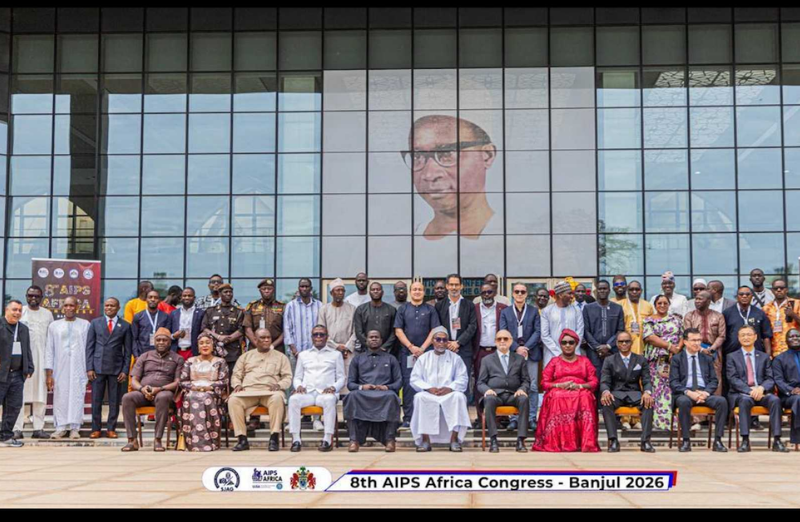
African sports journalists convene in Banjul as AIPS Africa places digital media, artificial intelligence, and ethical reporting at the center of the continent’s sports journalism agenda.
Banjul | By Foday Mane
The 8th AIPS Africa Congress officially opened on February 6, 2026, in Banjul, marking a significant moment for African sports journalism as regional and international stakeholders gathered to confront the profession’s evolving challenges in the digital era.
Hosted for the first time in The Gambia, the congress is being held at the Sir Dawda Kairaba Jawara Conference Centre and has brought together sports journalists, federation leaders, policymakers, and media professionals from across Africa and beyond. The four-day gathering is centered on the theme “Digital Media, AI, and Ethical Sports Journalism in Africa,” reflecting growing concern over misinformation, technological disruption, and professional standards.
AIPS Africa President Abdoulaye Thiam underscored the urgency of the discussions, warning that unchecked digital practices and fabricated content risk undermining public trust in sport. He described the congress as a platform to safeguard the credibility of African sports journalism at a time of rapid technological change.
The opening ceremony was presided over by the Vice President of the Republic of The Gambia, His Excellency Mohammed BS Jallow, an unprecedented level of state representation for an AIPS Africa Congress. Senior officials in attendance included AIPS President Gianni Merlo, ministers of sports from Ghana and Senegal, diplomatic representatives, continental sports leaders, and members of the AIPS Executive Committee.
Merlo described the scale of participation as historic, noting that never before had African sports journalists received such institutional attention. Thiam echoed this sentiment, calling the presence of a sitting vice president a strong signal of recognition for the role of sports media on the continent.
In his address, Vice President Jallow emphasized the responsibility of journalists in shaping ethical narratives in an era dominated by digital platforms and artificial intelligence. He described sports journalists as essential actors in linking athletes’ achievements to public understanding and national identity.
Ghana’s Minister of Sports, Kofi Iddie Adams, urged journalists to embrace their role as agents of development, calling for broader coverage beyond football and responsible use of new media tools. Senegal’s Minister of Sports, Khady Diene Gaye, highlighted collaboration between media and institutions as a prerequisite for sustainable sporting success in Africa.
The President of the Sports Journalists Association of The Gambia, Omar Jarju, thanked the Gambian government and partners for supporting the event, describing the congress as a milestone in the country’s growing engagement with international sports institutions.
The 8th AIPS Africa Congress will continue until February 9, with sessions focused on media ethics, digital transformation, artificial intelligence, and cross-border collaboration, as African sports journalism confronts a rapidly changing global landscape.