
BY Sayer Zaland- AIPS Member
Kabul: Afghanistan has never marched at a Winter Olympic Games. Not in Nagano or Salt Lake City. Not in PyeongChang in 2018, when two Afghan alpine skiers campaigned for a historic debut. Not in Beijing in 2022, when officials cited technical problems as passports and politics collided. And, barring a miracle, not in Milano-Cortina 2026 either.
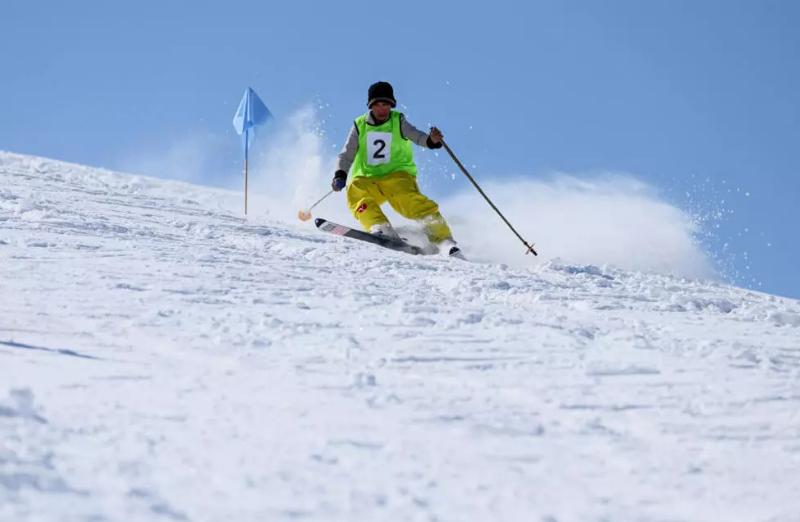
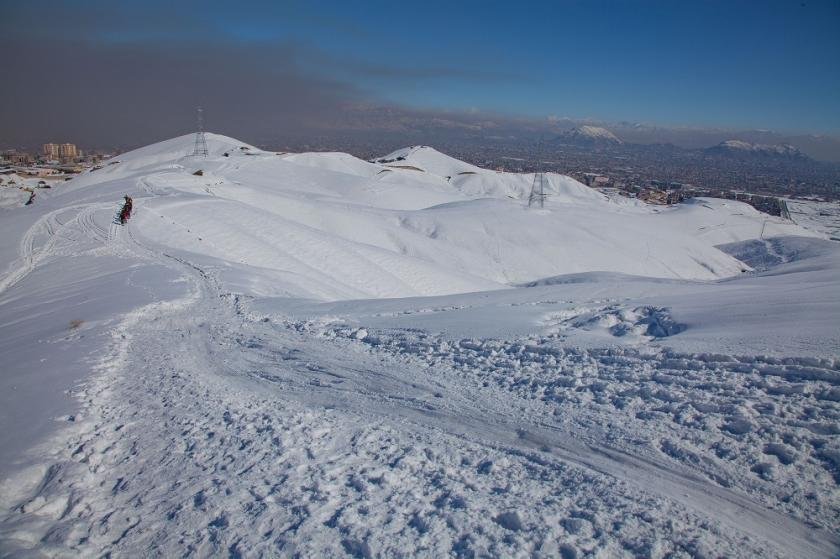
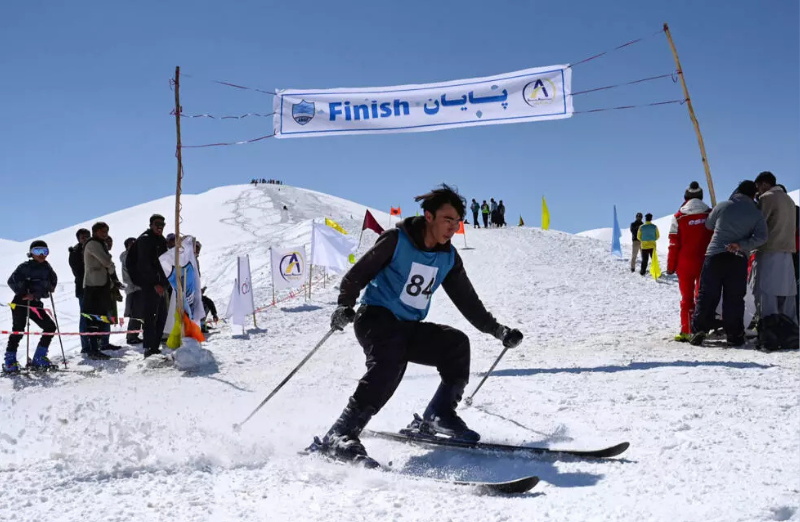
Yet on a windswept slope outside Bamiyan, the country’s unlikely ski capital, the sport refuses to die. Teenage racers shoulder battered skis and hike a piste with no lift. Coaches shout encouragement into thin, icy air. And a small, stubborn community imagines an Afghan flag one day beside the world’s best in Italy.“There are still enthusiastic skiers who don’t want skiing to fade away,” says Esmatullah Haidari, a 23-year-old team captain in Bamiyan.
A federation with heart, no budget
Afghanistan’s ski movement grew from donations, handmade wooden skis, and the NGO-run Bamiyan Ski Club, which staged the Afghan Ski Challenge and nurtured athletes like Sajjad Husaini and Sayed Alishah Farhang, both once touted as Olympic hopefuls.
The Taliban’s 2021 return shattered hard-won gains, especially for women. Sponsors vanished, several leading skiers left the country, and women were effectively barred from sport.“We have a very limited budget for the sport,” concedes Mohammad Daud Kargar, president of the Afghanistan Ski Federation. “In the previous three years, we haven’t received any support.”
Haidari feels the absence acutely: “Everyone should be free, and should be able to study and to ski. We miss our sisters a lot.”
Why Milano-Cortina is out of reach
Olympic alpine qualification is administered by the IOC and FIS (the International Ski & Snowboard Federation). For Milano-Cortina 2026, athletes must appear on the Olympic Quota Allocation List based on results from 1 July 2024 to 18 January 2026; NOCs receive places according to those lists and event quotas.
In short, you need recognized results and a minimum of FIS points in the qualifying window.
As of late July 2025, there are no Afghan skiers with active FIS points on the current lists, and Afghanistan does not appear among NOCs holding provisional alpine quotas. That makes an Olympic start in 2026 extraordinarily unlikely.
This is not new. Afghanistan announced a planned Winter debut in 2018 with Husaini and Farhang, but it never materialized; Olympedia still lists the country as never having competed at the Winter Games. In 2022, Afghan skiers did not reach Beijing, local media cited passport and administrative issues.
Politics, women, and the IOC’s line
The IOC maintains relations with Afghan Olympic officials in exile and has made gender representation a condition for recognition, allowing a six-person, gender-balanced Afghan team at Paris 2024, while pointedly barring Taliban officials from accreditation.“It’s to show what is possible,” an IOC statement of the equal-gender delegation.
That stance collides directly with the de facto ban on women’s sport inside Afghanistan. In Paris, Afghan sprinter Kimia Yousofi used her moment to plead for girls’ rights, “Education, Sport, Our Rights”, underscoring the gap between IOC policy and realities at home.
The Afghanistan Ski Federation, operating under Taliban oversight, did not respond to multiple requests for comment. The Taliban’s sports commission has previously insisted it supports “all sports in line with Islamic values,” but has offered no clear stance on skiing or women’s participation.
Climate headwinds on the roof of Central Asia
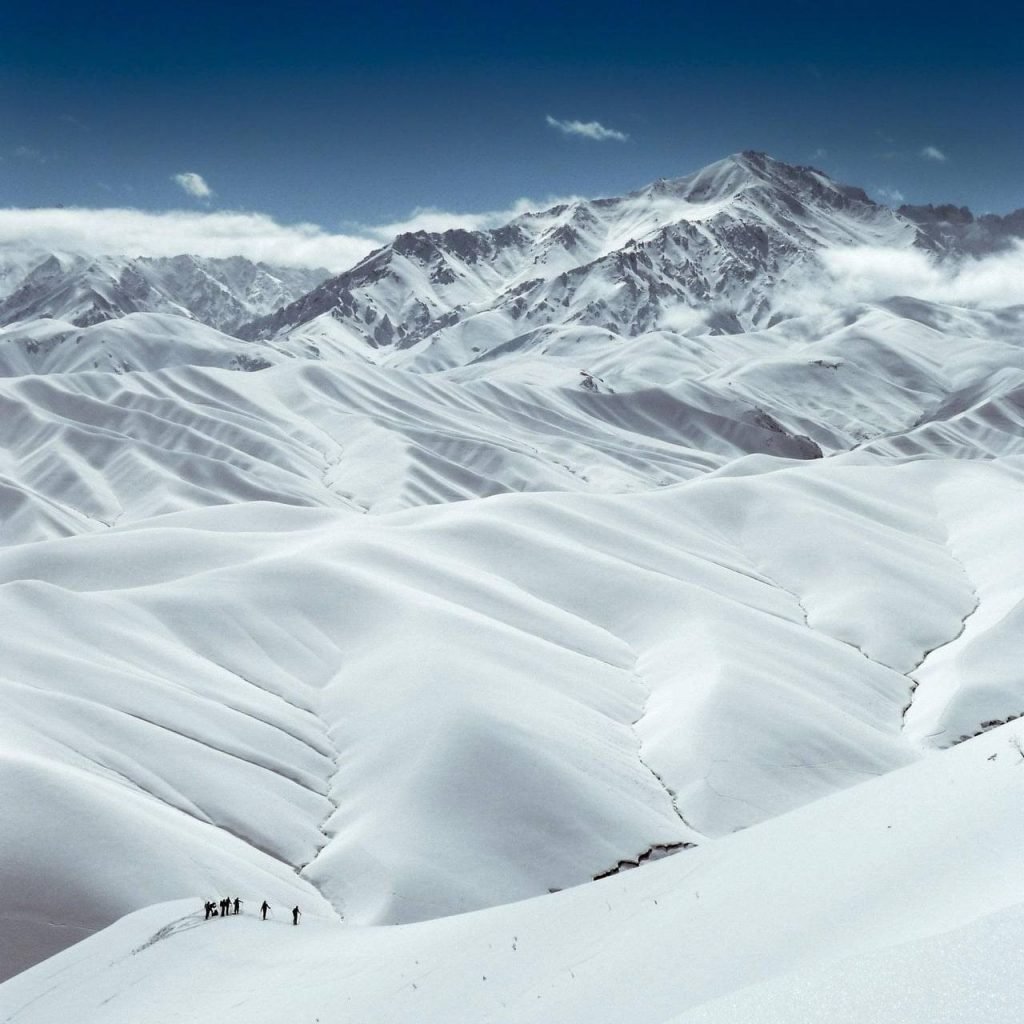
Even without politics, the snow itself is under threat. UN Environment modelling for the Central Highlands, where Bamiyan lies, projects temperatures rising by more than 2.5°C by the century’s end. Shorter seasons, erratic snowfall, and faster melt are already squeezing the ski window.
Locals say the change is visible.“Ten years ago, we started skiing in December,” recalls veteran coach Shah Agha Rezayee. “Now, most years, there is no good snow until late January—and by March it is already melting.”
Coaches estimate the usable season has shrunk from nearly four months a decade ago to barely six weeks today, an erosion that makes consistent training almost impossible. With so little snow, Afghan skiers miss the hundreds of hours on piste that athletes elsewhere can bank each year.
“The window of opportunity for skiing is likely to become much smaller,” UNEP warns. Without snowmaking or higher-altitude venues, Afghanistan’s grassroots skiers may simply run out of winter before they ever reach an international level.
A sport held together by willpower
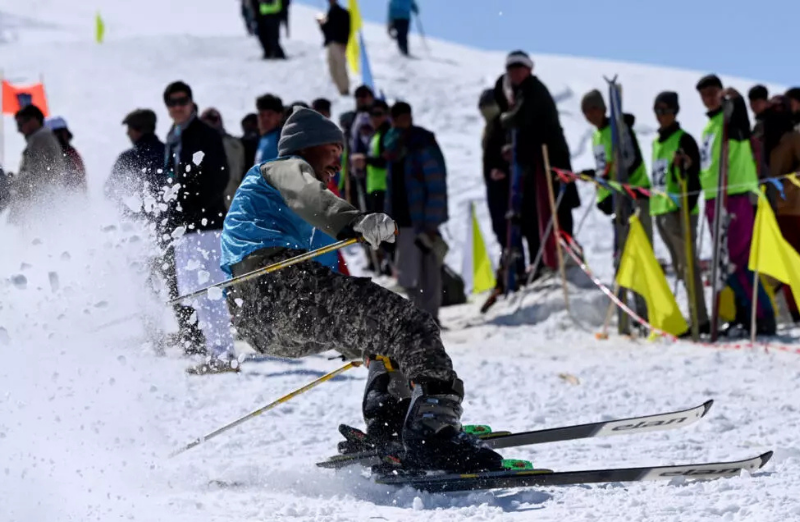
In March 2024, Bamiyan hosted the federation’s first formal race of the season. There were no lifts, little money, and no women on the start list. But there was noise, locals clapping as children and adults tucked through a handmade finish.“Fans of the sport have revived the spirit of skiing,” said veteran trainer Rezayee.
International adventure outfit Untamed Borders hauled roughly 130 kg of donated gear into the country to keep athletes sliding.“Even if we don’t get resources,” Haidari vows, “we will make wooden skis and we won’t let skiing die in Afghanistan.”
The paperwork nobody sees
For alpine, the rules are dry but decisive: quotas depend on a nation’s athletes earning FIS points at sanctioned events during the qualifying period; the FIS/IOC systems then allocate slots up to event caps. National federations also need functioning governance to enter athletes, secure visas, fund travel, and manage anti-doping whereabouts.
Afghanistan currently struggles on every front. A glance at FIS databases shows Afghan entries but no meaningful points in 2024-26. Without points, there is no basic quota, and therefore no bibs in Italy.
What an Afghan Winter, Olympic pathway would require
“First and foremost, Afghanistan needs stability and governance in sport,” says Firooz Mashoof, a veteran Afghan sports journalist. “Without a recognized, well-resourced federation that can enter athletes in FIS races, meet technical standards for timing and safety, and represent the country internationally, there is no path to the Olympics.”
He stresses that the foundations of any Olympic dream must be built at home: “You cannot send athletes abroad without a proper structure at home. Governance is the backbone of international recognition.”
Roya Mosawi, another leading Afghan sports journalist, points to the athlete pipeline as the next critical step.“Our skiers need regular exposure to real slopes, ski lifts, proper equipment, and quality coaching. Scholarships for young athletes to train in regional hubs are essential. Without this continuity, Afghanistan will always rely on symbolic participation instead of real competition.”
Mosawi also highlights the gender barrier: “Women’s participation is non-negotiable. The IOC has made it clear that representation and inclusion are a requirement, not an option. Excluding women means Afghanistan loses half its talent and risks being sidelined internationally.”
Both analysts warn that climate adaptation cannot be ignored.“Snow is vanishing,” Mashoof notes. “To sustain skiing, we will need higher-altitude venues and even snowmaking technology. It is costly, but if the season disappears, so does the sport.”
The human stakes
For Bamiyan’s kids, skis are more than a sport. “Sports in post-conflict zones is associated with therapeutic benefits,” notes Chris Shirley, founder of The Hiatus Foundation, who has supported Afghan athletes. Improved self-image, teamwork, even relief from PTSD symptoms, he argues, flow from sport. “Skiing is a powerful tool to make a positive change,” adds Farhang, one of the country’s original standard-bearers.
2026: the hard truth
With the qualification window closing on 18 January 2026, Afghanistan has no athletes on pace to meet alpine standards or claim a quota place. That’s due to a perfect storm: shuttered pathways for women, vanishing funds and sponsors, limited international race access, and climate-struck seasons that begin late and end early.
The IOC could, in theory, approve universality-type entries in some sports; alpine skiing does not presently offer an open “wild card” that bypasses FIS requirements. Result: no Afghan skiers in Milano-Cortina.
But the tracks are still there. On Bamiyan’s scarred ridgelines, ski tracks etch brief signatures before the wind erases them.“We should work for it because it is our motivation, interest, and love,” says Rezayee.
The athletes nod, hoist their skis, and start hiking again.