
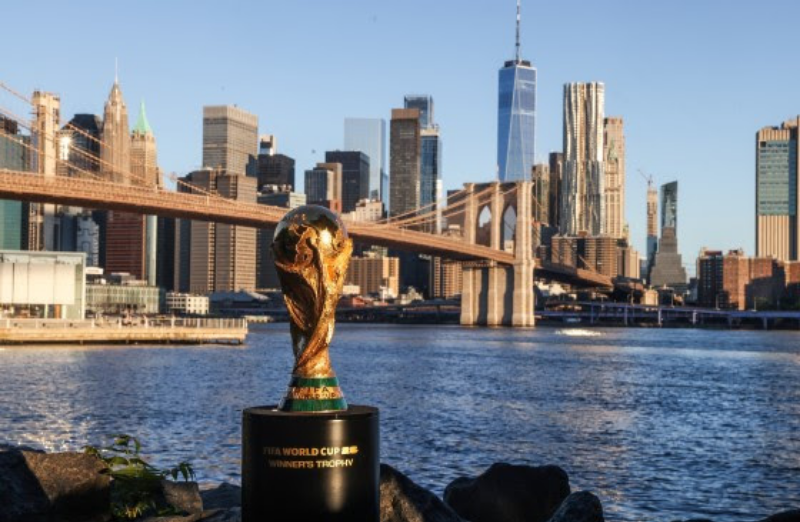
Fans holding tickets for the FIFA World Cup 2026™ will receive priority access to U.S. visa interview appointments under a new initiative launched by the U.S. Department of State and FIFA.
Washington, D.C. | By ASJF News
The “FIFA Priority Appointment Scheduling System” (FIFA PASS) was unveiled during an event at the White House attended by U.S. President Donald J. Trump, Secretary of State Marco Rubio, Secretary of Homeland Security Kristi Noem, senior officials from the White House Task Force, and FIFA President Gianni Infantino. The system will allow ticket holders travelling to U.S. host cities to secure faster visa interview dates ahead of the tournament.
FIFA PASS will become available in early 2026 and applies to fans attending matches across the 11 U.S. host cities, which will stage 78 games during the first-ever 48-team World Cup. Additional matches will be played in three cities in Mexico and two in Canada.
FIFA President Gianni Infantino said the initiative reflects preparations for what he described as “the greatest and most inclusive FIFA World Cup in history.” He thanked U.S. authorities for their cooperation, noting that the United States is preparing to welcome supporters “on an unprecedented scale.”
U.S. Secretary of State Marco Rubio encouraged fans to apply for visas early, stating that priority appointments will “help ensure supporters can complete interviews in time for the tournament.”
More than six million tickets are expected to be available for the event, which will be hosted across 16 cities in North America. Visa information, including eligibility for the Electronic System for Travel Authorization (ESTA) for Visa Waiver Program countries, is available through the U.S. Department of State.
The FIFA World Cup 2026™ is projected to generate major economic benefits for the United States. A joint study by FIFA and the World Trade Organization estimates that the tournament will create 185,000 full-time jobs and contribute USD 17.2 billion to U.S. GDP. The event marks the first World Cup held across three nations and the first to feature 48 teams.
