
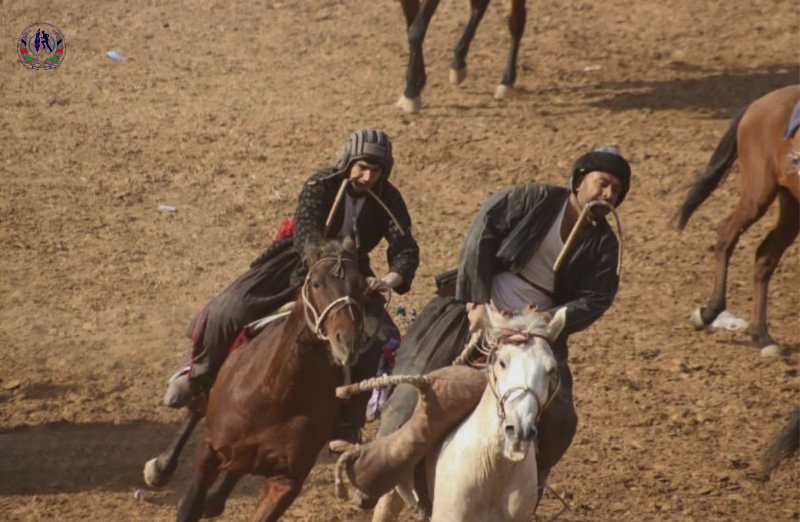
With foreign competitors, strict officiating, and live nationwide broadcasts, Buzkashi is stepping into a new era that could redefine Afghanistan’s sporting identity.
Riding Into the Future: Inside Afghanistan’s New Era of Buzkashi
By Sayer Zaland, AIPS Member
The winter sun dips behind the northern hills as riders gather at the edge of Baghlan’s Dand-e-Ghori field. The horses snort steam into the freezing air. A thousand men press against the sidelines, waiting for that first mad dash. When the carcass drops and the riders surge forward, the field explodes in a blur of dust, hooves, and roaring spectators.
For generations, this has been a familiar scene, but this winter feels different. Across Takhar, Balkh, Kunduz, Baghlan, and Panjshir, riders have been training with an intensity never quite seen before, all driving toward the opening of Afghanistan’s 7th Premier Buzkashi League in Kabul on December 11, 2025.
For the first time, the league is starting with a seven-figure bankroll, foreign competitors, international-level referees, modern training, and live national TV coverage. Buzkashi, a sport once held together by sheer willpower, is finally going big time.
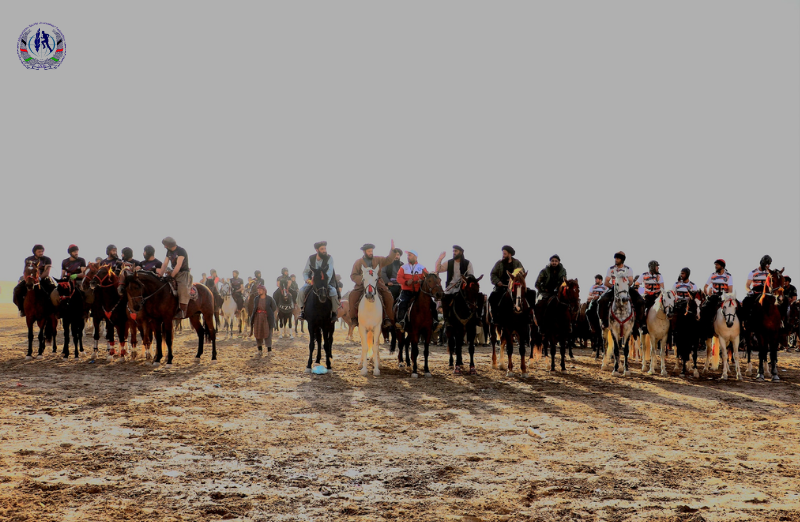
Prepares Together
In Takhar’s Doshte-Qala, crowds covered rooftops and hills during a massive two-day tournament in late November. Zabih Pahlawan Derqadi, who won the final oghlaq (carcass), wiped sweat from his face and simply said, “We ride for honor, not applause.”
In Balkh’s Maqeem Bai field, thousands turned out for three major events, with riders using the chance to sharpen their skills for the Kabul league. “The north is training like one team,” veteran rider Mustafa Pahlawan noted.
This season, that unity is what stands out most: the feeling that every rider, no matter their province, is heading toward a shared moment on the national stage.
Game-Changing Practice
If you want to see how much the sport has changed, look no further than the Baghlan pre-league match on November 17, 2025. Instead of the usual free-for-all, officials ran a structured, timed team match between Esteqlal and Omari.
“This is training for the national stage,” said provincial president Pahlawan Goldin. National referee Mansoor Beik Beikzad agreed: “This level needs a proper league system.”
The precision shown by the riders who followed, Kareem, Qayum, and Sayed Awwaz Pahlawan, proved they were ready for the professional tier.
The Professional Push
In Kabul, Federation president Ghulam Sarwar Jalal runs a busy office focused on training and regulation. “We finally have structure. This sport needs clear rules,” Jalal said.
According to Jalal, Afghanistan is aligning its rules with the World Kokpar Federation in Kazakhstan. The difference is key. “Kokpar uses a heavier padded carcass and strict time limits, making it less chaotic than traditional Afghan Buzkashi,” Jalal explained. “The basics are the same, but Kokpar is much stricter on the clock.”
Standardized judging is expected to finally bring consistency and fairness to a sport often won by pure instinct.
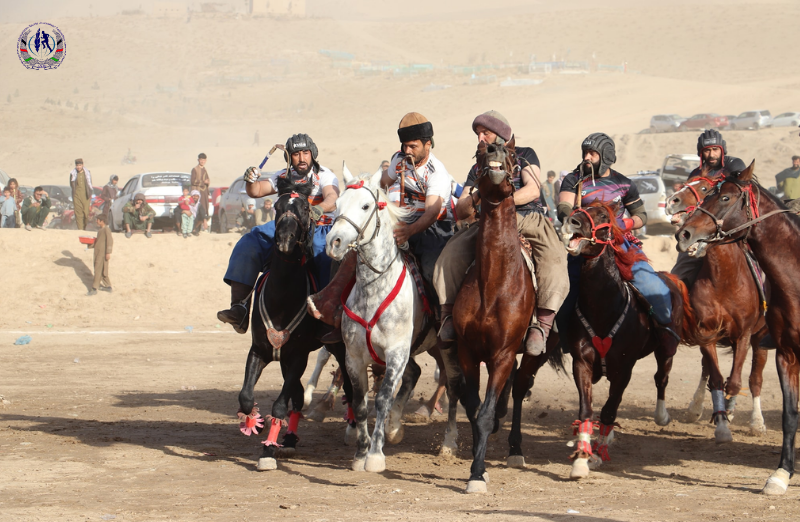
The Money That Changed Everything
Only a few years ago, the only rewards a winning Buzkashi rider might expect were sacks of rice, tins of oil, or a cow. Today, the money is huge.
The Federation is proud of the national investors who are reshaping the sport. Yama Petrol, the league’s title sponsor, has invested over USD 1 million, covering everything from horses and stables to equipment and salaries.
Founder and businessman Saeed Karim built his team from the ground up. “I want to serve my people. When my team wins, it’s an honor,” Karim said.
His team now owns over 40 top-tier horses, with some worth as much as USD 100,000. “Our annual costs for feed, grooms, and logistics reach USD 300,000 for one team alone,” he added.
Other Afghan sponsors, including Feisal Khorasani, Alokozai Group, and Afghan Telecom, have also stepped up. As Federation spokesperson Omid Tashqarghani put it: “Their support is keeping our traditional sports alive.”
Pain and Paychecks
The influx of cash has revolutionized the riders’ lives. Top riders now earn as much as USD 10,000 a year, with championship bonuses reaching USD 35,000, plus camels and even cars from their patrons.
But the costs are crippling. Afghan rider Zabih Pahlawan explained that feeding a champion stallion requires a specific, expensive diet of barley, dates, carrots, and fish oil, which costs over $700 every single month. “The horses are often worth more than a family home,” he said.
The physical toll is equally high. “Broken ribs, crushed fingers, and shattered legs are routine,” Zabih noted.
To look after his top riders, team owner Saeed Karim built a massive 10-acre recovery ranch with physiotherapists to help them heal, a level of care that remains a luxury most other teams lack.
Samim Pahlawan, a young rider in Balkh, summed it up: “You don’t ride buzkashi unless you’ve accepted pain.”
Zabih grew up on a small farm by the Kokcha River, riding his first horse at age nine. “Now, I train on a $60,000 stallion owned by a local businessman,” he said, describing a regimen that starts with long endurance drills. “This sport is our bloodline.” The scars on his knuckles and his quiet focus show that Buzkashi defines a man, even as professionalism changes the game.
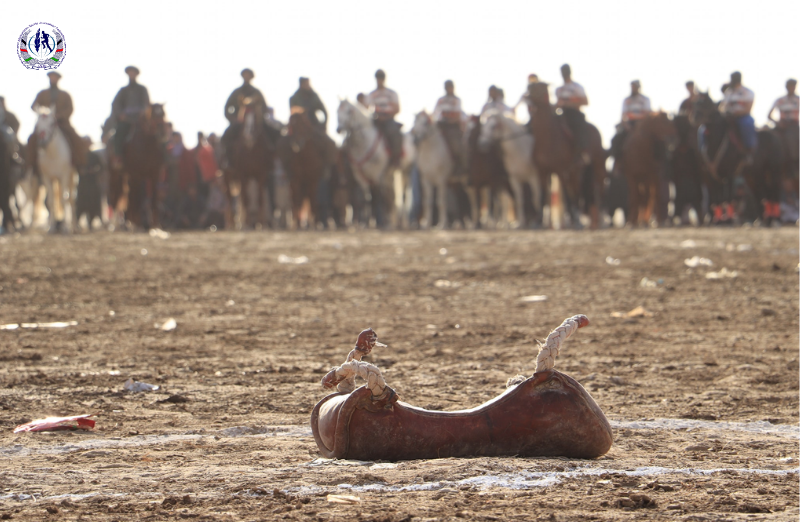
Crowds, Security, and Policy
At the 2024 league final in Mazar-i-Sharif, over 10,000 men packed the stadium, with security forces using stun devices to keep the surging crowds back.
However, women remain completely absent from Afghan stadiums. Both traditional culture and strict official rules keep them away. A Federation official confirmed: “Women cannot take part in sports under current rules.”
Yet the sport continues with full approval from the authorities, who recognize its role in public morale.
“People feel happy with buzkashi,” Jalal said. “That’s why we organize these events.”
A New Era of Broadcasting
For the first time, the national league will be broadcast live on National Sports TV, using drones, long-lens cameras, replay systems, and even tiny cameras mounted on the horses.
TV director Azizullah Hamdard said, “Every Afghan can watch every match.” He believes broadcasting is the necessary next step to turn Buzkashi into a national product, not just a regional passion.
Looking Outward
Afghanistan’s national team is massive and ready: 60 elite riders, 40 javelin specialists, nearly 2,000 active riders, and about 40,000 registered horses nationwide. The team ranks second internationally in groups featuring established Kokpar nations like Hungary, China, and the United States.
But travel remains the main issue. “The visa problem hurts us the most,” Jalal admitted. “Last year, we missed world events because of it.”
Upcoming tournaments in places like Tatarstan, Ulaanbaatar, Moscow, and the U.S. will be the real test of the sport’s ability to handle the global stage.
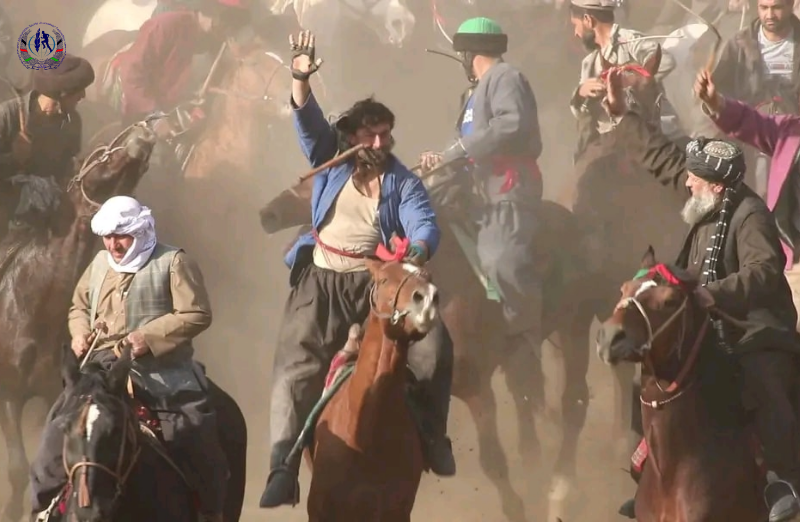
Riding Into the Future
As the league prepares to open on December 11, 2025, riders across Afghanistan are training to keep alive a tradition that has survived everything.
Federation spokesperson Omid Tashqarghani put it clearly: “This season will show the real face of Afghan buzkashi.”
And when those riders lean over their saddles and charge into the winter air, they are carrying more than just a tradition. They are carrying the pride of a nation still writing its own story. And they are carrying it at full gallop.