
Emilly and Lidia Moreira hit decisive hat-tricks as the sport’s most advanced programmes tightened their grip on the World Cup’s final stages.
Philippines | By Sayer Zaland, AIPS Member
Brazil and Portugal advanced to the semi-finals of the FIFA Futsal Women’s World Cup with performances that underscored the widening competitive divide between the sport’s strongest systems and the rest of the field. Both sides produced attacking displays shaped by structural depth, elite finishing and tactical coherence, setting up semi-finals against Spain and Argentina.
Brazil’s 6–1 victory over Japan was anchored by a ruthless hat-trick from Emilly, whose efficiency and range placed her at the centre of the Golden Boot race. Brazil pressed early, manipulated tempo through controlled possession and exposed Japan’s defensive rotations with clinical precision. The Seleção’s ability to dictate pace highlighted why they remain world No.1.
Japan’s exit, despite the margin, carried its own meaning. Their prolonged resistance in the second half and standout spells from Ryo Egawa and Sara Oino revealed an Asian programme edging toward a higher competitive tier. Their structural limitations remain clear, but their technical progression is unmistakable.
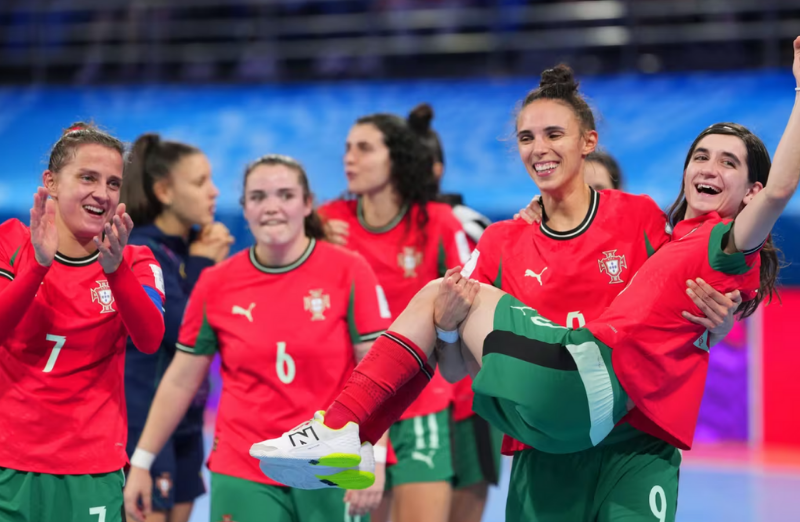
Portugal’s 7–2 dismantling of Italy followed the same pattern of dominance. Lidia Moreira’s hat-trick crowned a performance defined by fluid passing sequences, sustained pressing and superior decision-making. Supported by Ana Azevedo’s orchestration and Janice Silva’s decisive finishing, Portugal exposed the limits of Italy’s defensive structure.
Italy departed the tournament with credibility and moments of brilliance, including a record tournament win and the standout campaign of Renata Adamatti. Yet their defeat reflected a broader European divide: federations with long-term investment are pulling away from those reliant on short-cycle development.
With semi-finals now set, Brazil vs Spain and Portugal vs Argentina, the final stretch of the competition pits institutional stability against rising challengers, and individual brilliance against tactical discipline.
The FIFA Futsal Women’s World Cup Philippines 2025 has already reshaped expectations around global competitiveness. The tournament has highlighted the strategic maturation of South American and Iberian programmes, where sustained investment in women’s futsal has produced deeper player pools, more coherent systems and superior transitional play.
Conversely, teams such as Japan and Italy have showcased the growing ambitions of regions traditionally outside the futsal power core. Their progression to the quarter-finals, and the technical quality displayed throughout, signal expanding parity, even as resource and structural gaps remain evident.
For Brazil, the tournament has reinforced their status as the sport’s benchmark, blending physical intensity with advanced tactical roles. Portugal’s run reflects Europe’s accelerating commitment to women’s futsal, while Spain and Argentina continue to benefit from robust domestic leagues and rising youth pipelines.
The semi-finals now bring the clearest test of these global shifts, offering a confrontation not only of teams but of systems, the culmination of a tournament that has laid bare the contours of the sport’s next decade.