
Vicente Dattoli – AIPS EC Member
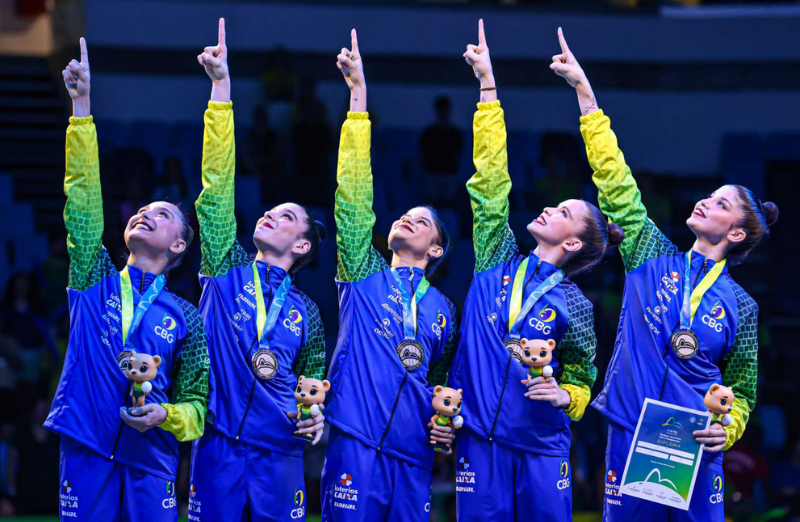
RIO DE JANEIRO – There’s a popular saying in Brazil that “homegrown talents don’t perform miracles.” At the 41st World Rhythmic Gymnastics Championships, however, the “homegrown talents” achieved more than a miracle: for the first time, the Brazilian team reached the podium, finishing second with a score of 55.250, behind only Japan, which achieved a score of 55.550 (third place went to Spain with a score of 54.750).
PhotoCredit_CBG_1345%20Wander%20Roberto.JPG)
And the miracle was a long time coming. The Brazilian team performed in the first group of 18 countries. They wowed the more than 10,000 fans with their mixed performance, set to the song “Evidências,” a hit that resonates with every surviving karaoke bar in the country. Then, in the singles, even without the same brilliance, they secured the group lead, finishing, for example, ahead of Olympic champion China. It was a matter of waiting.
The wait was long. In addition to the second group’s performances, the International Gymnastics Federation’s system also crashed, delaying everything for over an hour. And the countries performed. Despite the pro-Brazil cheering, there was no room for wishing the others failure. And with each lower score, the miracle seemed closer. When it came time for the sweet little girls from Japan, however…
.jpg)
Behind the Asians, it was hoped that no more countries would emerge to take the desired podium spot from the Brazilian team. Israel, the second-to-last to perform, was another risk. It didn’t happen. And the Brazilian girls, the “lionesses,” performed their miracle: in the first World Championships held in South America; in the competition that brought together the largest number of countries in history, for the first time a Brazilian group reached the podium. It wasn’t gold, but it was history.
