
This column reflects on the erasure of Afghan women’s football under Taliban rule, portraying exiled athletes who continue to play in defiance. It highlights resilience, identity, and hope through poetic journalism, focusing on human endurance rather than politics.
Bonn| Sayer Zaland
Four years after the Taliban banned women’s sport, Afghan women footballers still train in exile, scattered across continents, united by memory, keeping alive a game their homeland tried to bury.
They were told to disappear.
The boots packed away, the jerseys burned, the cheers silenced. But Afghan women did not vanish; they moved the game to exile, carrying their homeland stitched inside every shirt.
When the Taliban returned in 2021, they dismantled more than a team. They outlawed a dream. Stadium gates were locked, trophies hidden, names erased from rosters and memories alike. The Afghanistan Football Federation, now under the regime’s control, became an echo chamber of silence, a federation without half its people. Since August 2021, no official women’s football match has been held on Afghan soil.
In those same months, scattered voices kept the ball alive. From Kabul’s basements to Melbourne’s training fields, the women who once played for their flag met again, refugees, sisters, survivors. They did not have a federation anymore, but they still had the game and each other.
“When I tie my boots, I remember the night we were told to burn our jerseys,”
says Shabana, midfielder, now living in Germany.
“That smell never leaves you.”
Among them is Khalida Popal, one of the founders of Afghan women’s football, who helped evacuate dozens of female players after the Taliban takeover. From her base in Denmark, she still coordinates training and safety for those left behind, a quiet general in a war fought with courage instead of weapons.
The new rulers call this order and virtue.
They have erased every trace of women from Afghan football, replacing courage with control. The federation obeys, its silence louder than any whistle. It files no protests, organises no leagues, prints no posters. It watches the women’s game die and calls it peace.
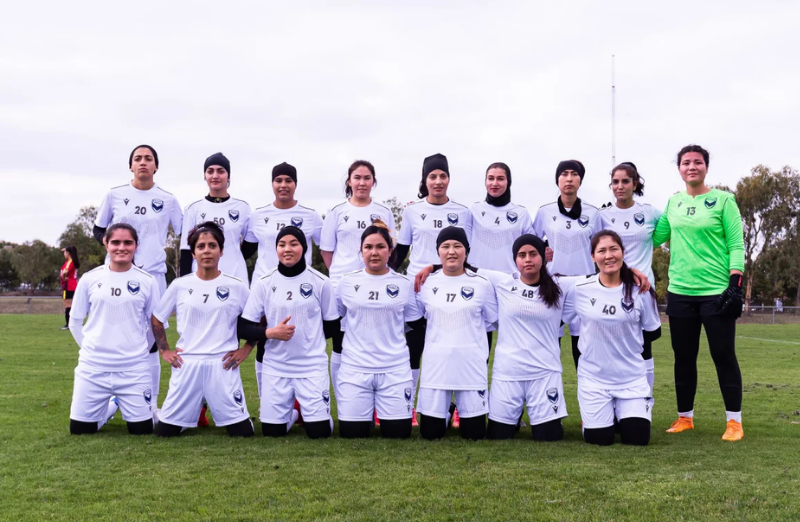
Yet the ball keeps rolling. In Australia, a patchwork team trains under a different sky. They play with borrowed kits and limitless purpose, carrying names the Taliban tried to bury. They play to remember. They play to exist.
For them, exile is not escape; it is endurance. Every pass is a small act of defiance, every goal a memory rescued from ash. They are not a team recognised by their federation, but they are recognised by history.
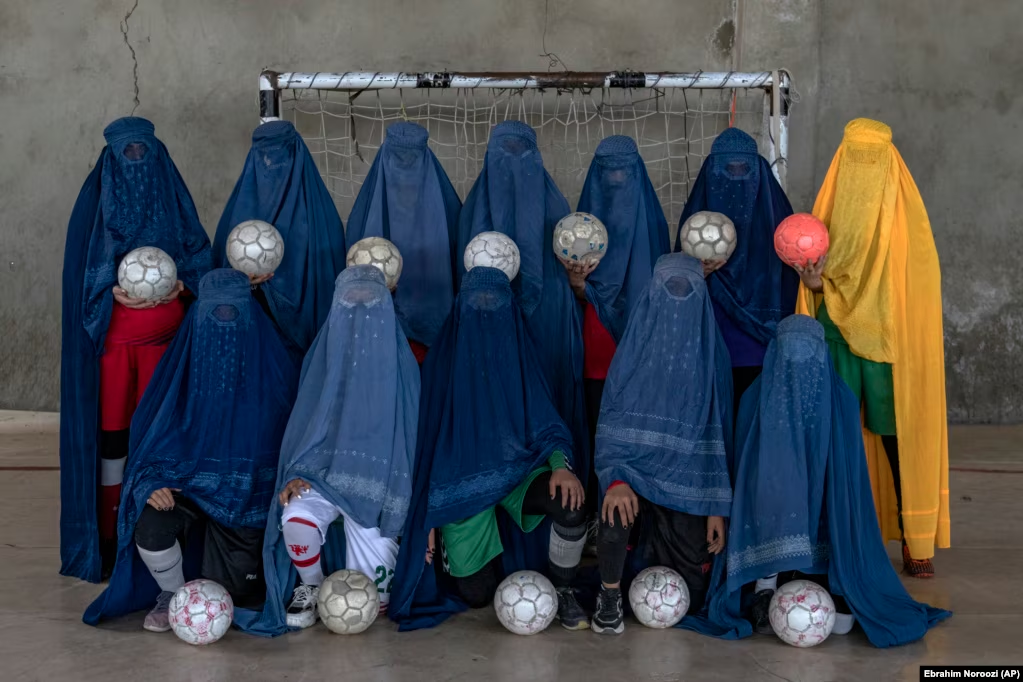
The Taliban can seize stadiums, but not spirit. The Afghanistan Football Federation can erase women from paperwork, but not from truth.
Someday, when the gates reopen and the chants return, these women will walk back onto Afghan soil and reclaim their half of the field. The grass will not ask who ruled; it will remember who played.
Until then, they remain the hidden champions of a forbidden game, heroes without rancor, believers without borders, the women who would not vanish.