
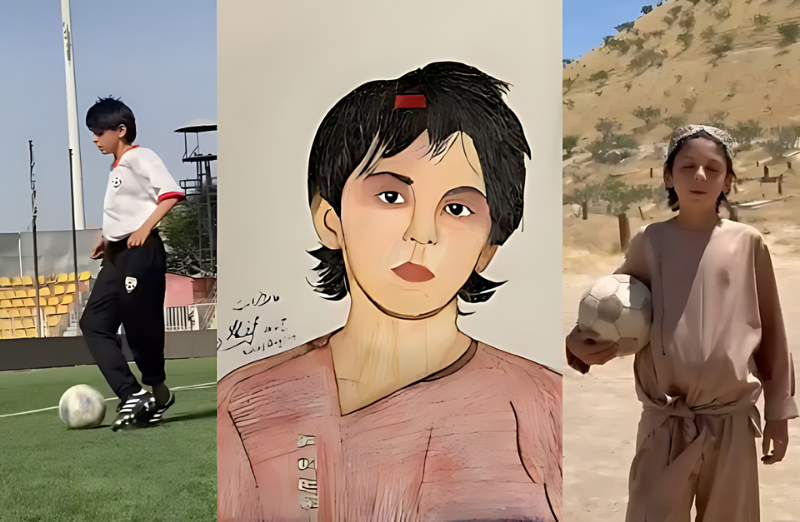
Afghanistan | By Sayer Zaland
Shamsu Rahman Shams, Ilias Niazi helped with the interviews
An old ball on cracked earth, a barefoot boy chasing a dream in the dust. The 27-second video of 13-year-old Mohammad Usman Atif that fascinated Afghanistan became more than a viral moment; it became a symbol of what survives when everything else falls silent.
The Day the Camera Found Him
The wind lifts the dust over a sun-baked field on the edge of Qala-i-Naw, capital of Afghanistan’s western Badghis province.
A small boy steadies a ball under his bare foot, eyes narrowed against the glare.
“Ready?” calls his brother Bilal, phone raised.
Usman nods once and begins to dance with the ball.
His sandals lie forgotten by the touchline as he glides across cracked ground, each flick of the ball fluent and free.
“I didn’t say anything,” Bilal later recalled. “He wasn’t showing off; he was just talking to the ball. I didn’t know how much people needed to see this.”
The shaky but magnetic clip would soon sweep through Afghanistan’s social media, captioned simply: “The future of Afghanistan.”
It was journalist Shamsur Rahman Shams who amplified it, posting the video on Roydad Media with the caption “Hope plays barefoot.”
“When I woke up, it had already gone everywhere,” Shams said to ASJFNews. “No commentary, no music, just truth. That’s why people believed it.”
“I’m truly happy that my work could help a young boy like Usman,” he added. “Thanks to Roydad Media for publishing it, and to those who ensured it reached the authorities. I hope we can keep telling such stories, of children who still dream through sport.”
To verify the boy’s identity, I traced the dusty lane where the video was filmed and spoke to his uncle, Idris Eisar, who confirmed that Usman was from the nearby village of Qarya-e Nazari.
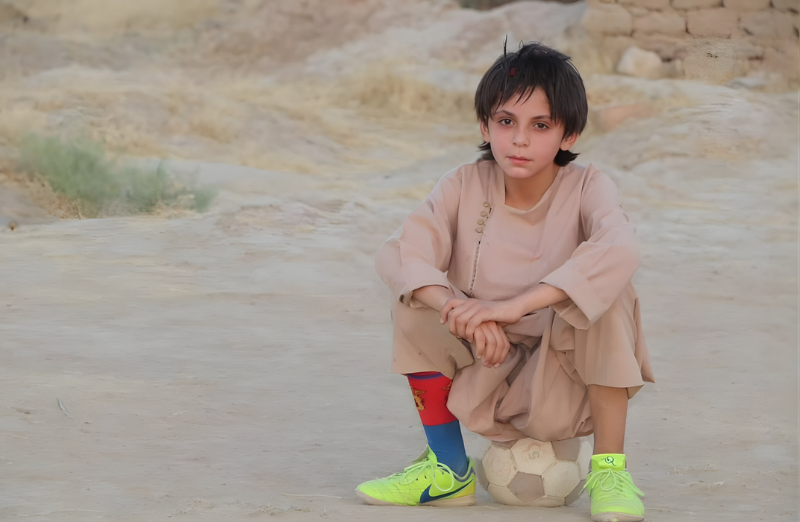
Discovery
In the clip, the boy wears a loose traditional tunic, tracking the ball as if fastened by imagination alone.
“There was no crowd, no coach, only dust and instinct,” says sports journalist Elias Niazi in Herat. “In a news cycle full of crisis, this was life. You could almost feel the earth breathe.”
When the footage went viral, Ahmadullah Wasiq, Director of the Afghanistan Sports and Physical Education Directorate, paused to watch.
“He had old shoes, but he had everything that makes a footballer,” Wasiq said to ASJFNews. “In him, I saw resilience.”
A Gift from Herat
In western Afghanistan, the story caught fire. Within days, Miraj TV in Herat sent members to deliver football shoes and training gear.
“We wanted him to know he was seen,” said reporter Amir Hussain Jafari, who led the trip. “We didn’t go as journalists that day, we went as brothers.”
For the boy who had mastered control barefoot, the gesture felt unreal.
“I held the shoes like glass,” Usman said softly. “I couldn’t believe people I’d never met cared about my game.”
In Badghis, provincial sports officials also honored him, gifting him a full set of football equipment and an honorary certificate of appreciation.
Soon after, an invitation arrived; the Afghanistan Football Federation wanted to meet him in Kabul.
“I thought they were lost,” said his father, Ghulam Yahya, a farmer. “Men in clean clothes asking for my son? When they handed him the boots, his hands shook. So did mine. I’d told him to work the land, but maybe God gave him another field.”
Journey to Kabul
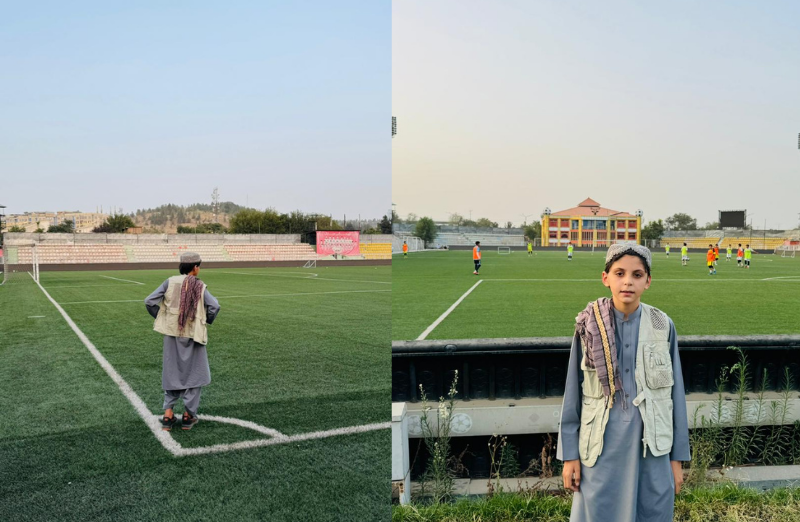
The road from Badghis to Kabul runs past villages where children play with bundles of cloth for footballs. For Usman, that road was not just a journey; it was a bridge between what is and what could be.
Going to Kabul, He sat in the back seat, “clutching the boots through mountains and dust storms,” recalled Jalal, the driver. “When we passed the first real pitch he’d ever seen, he pressed his face to the glass and said softly, “Khili sabzeh. In Dari” (It’s so green)
In Kabul, he met Alberto Vincenzo, the Italian head coach of Afghanistan’s national football team. Vincenzo watched him juggle, smiled, and offered a handshake.
“Discipline is your secret,” the coach told him. “Talent is only the beginning.”
During his visit ahead of the CAFA Nations Cup, Vincenzo described the meeting as a reminder of why football matters.
Mohammad Yousuf Kargar, President of the Afghanistan Football Federation, said the federation had appointed qualified professional coaches to evaluate Usman’s skill level and potential.
“We want to understand exactly where his game stands,” Kargar said. “He has promise, and we believe he can have a bright future in Afghan football.”
Usman, now popularly known as “Little Neymar”, has captured nationwide attention for his natural ability and joy on the ball. His encounter with the national coach reflected a quiet commitment to nurturing Afghanistan’s next generation of players.
A photograph of the two, one man in a federation tracksuit, one boy in a borrowed jersey, soon spread across Afghan timelines. It became a symbol of continuity in a broken nation.
“When I saw the green stadium for the first time,” Usman said to ASJFNews, “I thought of my friends back home. I wanted them to see this, too.”
A New Chapter in Herat
Today, Usman lives in Herat, where he studies at Bashiri Private High School. He trains regularly with the Sorkh-Poshan Club, under coach Yousuf Mohandes-Zada, who calls him “a disciplined and gifted child who learns fast and never misses training.”
“I’m proud to train with my teammates and coaches in Herat,” Usman said. “They treat me like family. I train three days a week, Saturday, Monday, and Wednesday, and play matches on Fridays. I’ll never forget the field where I started.”
His uncle Idris Eisar says the boy’s rise has brought hope to their entire village.
“People in Qarya-e Nazari say Usman revived the name of our village and province,” Eisar said to ASJFNews. “Everyone respects him. He’s humble, he visits home whenever he can, and he never forgets where he came from.”
His brother Bilal, who studies computer science in Herat, remains the quiet force behind the scenes, the one who filmed and uploaded that first 27-second clip.
“I just wanted to share his talent,” Bilal says to ASJFNews. “I never thought the world would notice.”
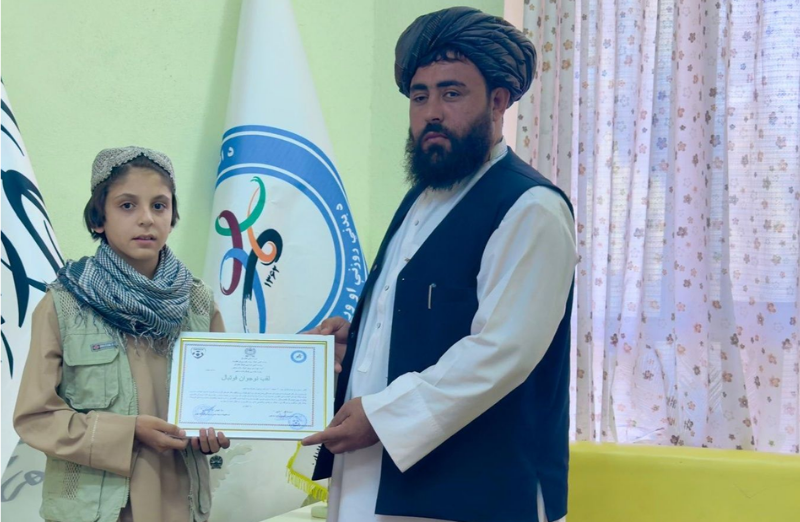
Recognition and Sponsorship
At a brief ceremony in Kabul, the Afghanistan National Olympic Committee and Millat Steel Company signed an agreement to fund Usman’s full education.
“This child represents every hidden talent in our villages,” said Naqibullah Nazari, the company’s director. “Football may be his passion, but education will be his foundation.”
“We have always tried to take practical steps. Our goal is to develop the young talents of our nation.” Wasiq said. “Many gifted young people have remained hidden because of war and hardship. Our goal is to find them, support them, and create every opportunity for their progress so they can bring pride to Afghanistan.
“When I first saw Usman’s video, his quick thinking and control were impressive. Nazari said during the ceremony. “That’s why we made every effort to locate him, meet his family, and assure them we’ll support both his football and his education.” Later, he said ASJFNews, Whatever he needs, in sport or study, we are committed to providing it.”
The Boy Speaks
In an interview with ASJFNews, Usman has shown the same calm maturity that first caught the nation’s heart.
“I love Neymar because he plays with joy,” he says. “I dream of playing for Barcelona, and one day I want to be proud of my country. But before that, I must study and train hard.”
He adds: “My message to other children is simple: if the conditions are good, play football and train. If not, study. Never give up.”
Home, Hope, and Pride
Back in Qarya-e Nazari, villagers still crowd around phones to replay the clip that started it all.
“Now every boy here is kicking a ball after school,” laughs Rahim, a shopkeeper. “Their mothers complain about the dust, but they’re proud. Usman didn’t just leave, he sent hope back.”
Teacher Abdul Qadir adds: “When our students saw him on TV, they didn’t just clap, they stood.” The teacher said to ASJFNews that he made them believe that a phone in your hand isn’t only for watching the world, “it’s for showing the world you exist.”
Neighbor Saboor Rahmani smiles. “Usman has always been curious. always asking about tactics and players. He’s a natural talent, a pure gift. We all call him our little Lalay.”
14-year-old Zainab, who dreams of joining the women’s national team, says softly: “When I watched him, I thought maybe they would see us girls too. Maybe one day, someone will film me.”
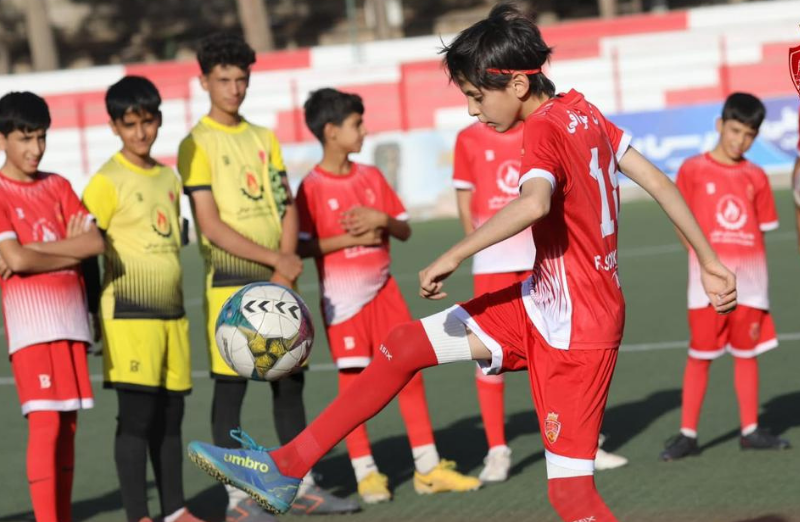
Children like Usman remind the world that Afghan sport is still alive,” said Samira Asghari, IOC member and former national basketball player. “Even in the toughest times, they show the courage to dream.”
Usman’s uncle, Mohammad Idris Eisar, welcomes the attention but worries about what it means for other children. “There are thousands of boys like him in our villages,” he said. “Most will never be found unless a camera passes by. I’m proud of Usman, but I hope the government and sportspeople don’t wait for another video to care. Talent should not depend on luck or a phone.”
A Nation Watches
Across Afghanistan, professional players took notice.
“He reminds me of myself at that age, but his path is harder,” said Faysal Shayesteh, national-team player and former captain. “We carry a nation that needs heroes. My advice: protect your joy, that joy on the dust is your greatest strength.”
“In a country still learning how to breathe again,” adds sports historian Khalid Hotak, “a boy with a ball reminds us what life sounds like.”
On social media, fans still comment months later: “When he plays, we forget our troubles for a minute.”
The Road Ahead
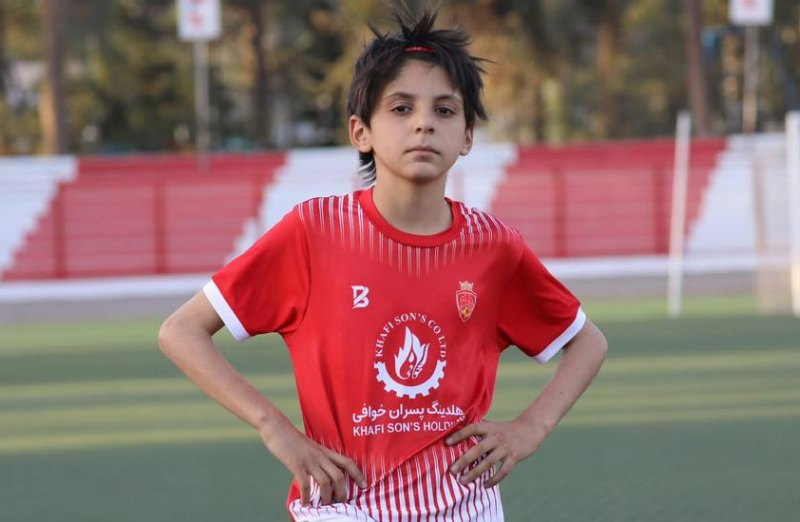
Now enrolled in school, Usman trains at Herat’s green stadiums.
“I’ll never forget that dust,” he says. “It was my first coach.”
His father watches from afar. “Every night he sleeps with those boots beside him,” says Ghulam Yahya. “When he runs, it feels like we all move forward.”
As the floodlights fade and Herat slips into shadow, somewhere in the quiet backstreets of Badghis, another barefoot boy ties his sandals and begins to play, the dust rising again. waiting for the next story to be seen.
In every country, children chase a ball on rough ground. But in Afghanistan, that simple act still feels like defiance, a quiet claim to the right to dream.
The dream is already there: small, stubborn, and shining through the dust.
Just as cricket’s rise once unified a weary nation, Usman’s journey is more than personal triumph. It is a blueprint for renewal, a reminder that even in silence, Afghanistan still dreams.
And as dusk settles over Herat, the echo of leather on grass drifts across the city. A single sound carrying the promise that the nation’s heartbeat, though faint, still plays in time with the world.
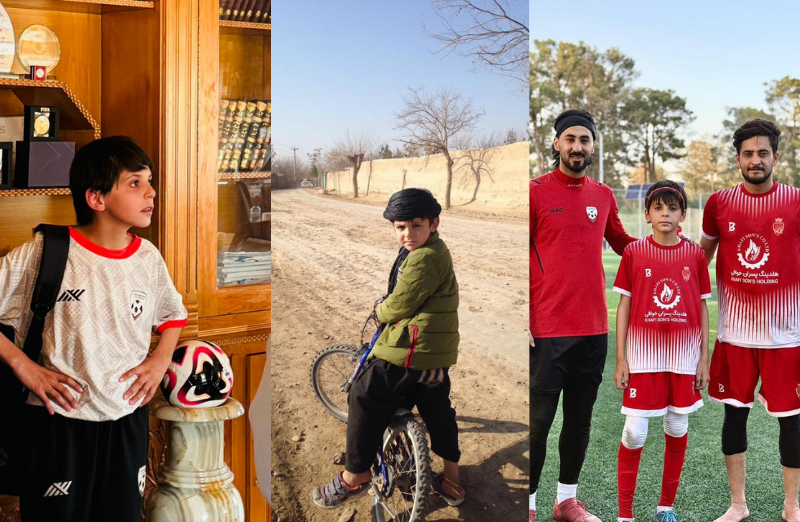
Caption for the feature photo:
A composite image showing Usman Atif in training, an artist’s portrait, and a still from the viral video that first revealed his talent.

This is the very best Report
Very good Report in This Yare 👏
Sport carries a powerful message of hope and unity for individuals and society. This report vividly illustrates how a single story can inspire change and transform lives through the spirit of sport.
Thank you, Mr. Mohammadi. Coming from a journalist of your experience, this means a lot. You’ve always shown how media can build bridges, and this story proves that even one child’s dream can unite a nation. Your words truly capture the heart of Afghan sport.
Exactly right, Mohammadi sab! One story, one child, one ball, and suddenly a whole country feels hope again. That’s the magic of sport, and of good journalism.
This story touched my heart. In a time when so many headlines bring sadness, Usman’s journey reminds us that hope still lives in every Afghan village.
Beautifully written! Usman’s story shows that real talent doesn’t need fancy stadiums, only passion and belief. I hope more children like him get a chance to shine.
As someone from Badghis, I’m so proud of this boy. Our province is often forgotten, but Usman showed the world that dreams grow even in dust.
The part where he said “Khili sabzeh” made me cry. For many children, seeing a green pitch for the first time is like seeing a dream become real.
Freshta Hamidi, Mazar-e Sharif
A powerful piece of storytelling by ASJF. This is what sports journalism should do — find the stories that unite us and give voice to those who can’t speak for themselves.
After reading this, I showed the article to my students. They couldn’t stop talking about it. Usman has become a role model for every child who dares to dream.
Stories like this prove that Afghan sport is not dead — it’s just waiting for the world to notice. Congratulations to the ASJF team for keeping the light alive.
Respect to his family, his brother Bilal, and the journalists who found him. Sometimes one video can do what years of policy cannot — inspire a nation.
Reading this from abroad brought tears to my eyes. Usman’s smile and humility represent the Afghanistan we all miss, proud, hopeful, and full of dreams.
One of the best stories I’ve read this year. The topic, the way you approached it, and the wording—everything is incredible.
Barefoot, but not hopeless. That’s the Afghanistan we love.”
Great reporting. You didn’t exaggerate; you just showed the truth, and that’s why it feels powerful.
This story reminded me that hope in Afghanistan doesn’t live in buildings or offices; it lives in our children. The image of a barefoot boy juggling a ball in the dust shows how talent survives even when opportunity doesn’t. I’ve shared this article with my students to show them that dreams don’t need perfect conditions. only courage.
The Boy from Badghis” belongs among the most memorable Afghan features of recent years. It carries heart without losing craft, and journalism without losing soul. The ending “Afghanistan still dreams”, feels like both a prayer and a promise.
Beautifully said, Mr. Taib. Your words remind us why good journalism matters, not just to inform, but to inspire. This story is proof that Afghan sport still beats with life, no matter how hard the times.”
You can almost hear the ball striking the ground when you read this. That’s how vivid the reporting is. In a media landscape full of politics and noise, this story reminds us of simplicity, one boy, one dream, one nation watching.
This is not only a sports story; it’s social documentation. It shows how visibility itself, being seen, can alter a child’s trajectory. The narrative is balanced between empathy and structure, which makes it both moving and credible.
When I saw the photo of Usman shaking hands with the national coach, I smiled for the first time in days. That image says: Afghanistan still belongs to its children. Thank you for capturing that hope so gently.
What stood out to me was the visual language. I could picture the dust, the torn shoes, the light in the boy’s eyes. This isn’t just good writing; it’s good seeing. The journalist caught the essence of what Afghan sport still is: raw, beautiful, unfinished.
When I read this, I felt like someone finally told our story, not of pain, but of persistence. We grow up hearing that everything is impossible, yet Usman proves otherwise. Thank you for writing about real people, not only the powerful ones.
ONE OF THE STORYIES, THAT REMAIN AS TO THINK ABOUT THE FUTURE OF OUR CHILDREN. WE HAVE TALENT, WE HAVE POWER, BUT WE NEED PLACES TO UTILIZE OUR TALENT, AND TO SHOW TO THE WORLD THAT WE ARE A NATION OF PRIDE. VERY MUCH APPRICIALTED AND HOPE TO HAVE MORE STORIES LIKE THIS.
Proud to see a boy from our province making headlines for something positive. Usman, may you make us all proud on the national team one day!
Every paragraph carried emotion. I could feel the pride, the pain, and the hope of our country in these words.
This article shows how good sports journalism can change lives. Salute to the writer and those who found the boy. I would like to Thank you ASJF for highlighting such stories. In a time of sad news, this kind of reporting gives the nation strength.
the most beautifully written story about Afghan sport. It felt like I was standing right there in the dust of Badghis.
The writing touches the heart, this isn’t just journalism, it’s art. Thank you for reminding us of the real Afghanistan.
This feature reminded me why sports journalism matters. It’s not just about reporting matches or scores — it’s about finding humanity in forgotten corners of our country. Sayer Zaland’s piece captured every detail with respect and emotion. You can feel the wind, the dust, the silence, and then the joy of a small boy whose story became the heartbeat of Afghanistan for a few days. We need more writing like this — stories that make us remember who we are and what dreams still live among us.
این مقاله واقعاً شاهکار ژورنالیزم ورزشی است. نوشته با احساس، دقیق و پر از امید. وقتی خواندم، احساس کردم در همان زمین خشک بادغیس ایستادهام و توپ را میبینم که با هر ضربه، زندگی میسازد. ممنون از ASJF و نویسنده محترم،زلاند، که صدای کودکان روستا را به جهان رساندید.
When I read this story, I didn’t just see a boy playing football; I saw a mirror of our generation. We grow up in uncertainty, yet we still chase something better. The author beautifully showed how one 27-second video can carry a nation’s hope. Every sentence was alive with feeling, especially the way the article linked Usman’s journey to the idea of national renewal. As a reader and as an Afghan, I felt proud.
As someone who has trained kids in Badghis, this story touched me deeply. The conditions described are real, cracked fields, torn balls, barefoot practice, yet the love of football never dies. The article shows how much potential our rural children have if only they’re given attention. I hope this story inspires the Afghanistan Football Federation and the government to search for more Usmans across the country. There are thousands of them.
دا رپوټ ډېر ژور احساس لري. د ماشوم له یوه ویډیو څخه یو ملت الهام اخلي. دا یوازې د فوتبال کیسه نه ده، دا د افغانستان د زړه کیسه ده. بارکالله لیکوال ته چې د خاورې له منځه امید راویست.
The moment I finished reading, I went back and watched the original video again. It’s amazing how the article brings that short clip to life, the smell of dust, the sound of the ball, the silence before he starts playing. This is not just a report; it’s a tribute to every Afghan child who plays with what they have. Thank you, ASJF News, for writing something so human.I sill remember first days of my sport career, and know how important these moments are for Usman
Ustad Hotak, it’s an honor to see your words here. Coming from a champion like you, this comment means a lot. You’ve inspired so many Afghan youths yourself, and it’s powerful to see you appreciating a young boy who’s just starting his journey. Usman will surely feel proud knowing that a national hero like you understands his struggle. One day, maybe he’ll carry the same flag of hope in football that you carried in martial arts.”
محترم هوتک صیب، ستاسو دا خبره رښتيا الهام بښونکې ده. تاسې خپله د افغانستان لپاره د زړورتيا نښه ياست، او اوس چې د يوه کوچني هلک کيسې ته دا ډول احساس لرئ، دا ښيي چې رښتيني اتلان د نورو خوبونه هم ويني. ان شاءالله، يو وخت به دا هلک هم د افغانستان بيرغ پورته کړي لکه څنګه چې تاسې پورته کړی.
واي ګران هوتک صیب! ستاسو خبرې زړه ته رسي. تاسې تل د افغان ځوانانو لپاره د زړورتيا او هڅې مثال ياست. اوس چې د عثمان کيسې ته هم توجه ورکړئ، دا موږ ته دا احساس راکوي چې هر سپورتي ميدان يو کور دی، که هغه MMA وي که فوټبال. ستاسې دا مهرباني ډېره معنا لري.
The structure and language of this article are outstanding. It reads like a novel but remains factual. The writer’s ability to weave emotion with journalism shows real skill. The way the article closes, with the image of another barefoot boy tying his sandals, that’s pure poetry. It leaves readers hopeful yet thoughtful. This piece should be translated into Dari and Pashto so that every Afghan can read it.
As a coach, I see so many young players with the same hunger and discipline as Usman. What impressed me most about this article is the attention to detail, from his training schedule to his emotional reactions. It’s rare to see sports stories written with such accuracy and respect. I hope this article motivates local clubs to scout more village talent.
As a Journalism student, I liked how the article followed Usman’s journey step by step — from the dusty field to Kabul, and then to Herat. It gave us the full picture, not just a viral moment. It showed how community, family, and institutions can work together when hope is shared. For once, Afghanistan was in the news for something positive, and that’s because of journalists like you.”
As an Afghan living abroad, this story gave me tears and pride at the same time. It reminded me of the childhood we all had, making balls from socks and dreaming under broken lights. The writer captured not just Usman’s spirit but the entire Afghan reality: struggle mixed with unbreakable hope. Thank you for reminding us that Afghanistan still dreams, and sport is its purest language.
من این داستان را برای شاگردانم خواندم. همهشان با شوق گوش میدادند. یکی از شاگردانم گفت: ‘استاد، شاید روزی من هم مثل او شوم.’ همین یعنی تأثیر واقعی ژورنالیزم.
As a youth coach, I can say this article is both emotional and technical. The writer understands football and village life perfectly. Every paragraph teaches respect, patience, and faith. Pieces like this should be read in Afghan schools, they motivate our next generation.
The thing I loved most about this story is its honesty. No exaggeration, no politics, just truth and humanity. It shows that journalism can still inspire people, even in difficult times.
There are many kids like Usman in every Afghan village, talented, unseen, and full of hope. This article reminded us that dreams still live on. Thank you ASJF News for showing the world a son of Badghis.
I really appreciate how the writer didn’t just report the viral video but followed the full journey, from the dusty field in Badghis to the stadiums of Herat. That’s real storytelling. This article speaks from the heart, not from distance.
The writer’s tone and structure are powerful. You can feel every emotion, the dust, the silence, the joy. This article isn’t just about one child; it’s about a nation’s endurance. Excellent work, ASJF team.
Every time I read a story by Sayer Zaland, I feel Afghanistan breathe again. This piece is exceptional, the final lines about another barefoot boy waiting to be seen gave me chills. Thank you for keeping hope alive through words.
عثمان رښتيا هم د افغانستان د هر کلي استازی دی. هغه د اميد او زړورتيا نښه ده. دا هلک به ان شاءالله يو ورځ د ملي ټيم غړی شي.
very interesting and well written
One of the best stories, Best of all
This article reads like poetry, but every line carries truth. It shows that Afghan sport isn’t dead, it’s waiting to be seen. I hope more stories like this will be written about young girls too
As a young journalist, I learned more from this article than from any textbook. The narrative, structure, and tone show how storytelling can humanize even the simplest event. Thank you, ASJF, for setting a new standard for sports reporting
This report is proof that journalism still has heart in Afghanistan. It reminded me of our early days, no shoes, no field, only dreams. Every sentence feels alive. It’s not just Usman’s story; it’s ours.
دا لیکنه واقعاً د هنر یوه بڼه ده. هره جمله د هیلو غږ دی. ژورنالېزم باید همداسې وي — نه یوازې خبر، بلکې احساس او امید.
This is one of those rare articles that feels history. It blends journalism, emotion, and literature perfectly. The final line, ‘Afghanistan still dreams’ — is unforgettable.
This is one of those rare articles that feels history. It blends journalism, emotion, and literature perfectly. The final line, ‘Afghanistan still dreams’ — is unforgettable.
This is more than a sports story — it’s a testament to the power of hope. I could feel the dust, the sun, and the sheer joy of the boy chasing his dream. Beautifully written.”
The narrative flows like a novel, yet it’s all real. This story shows that football is more than a game, it’s a language of hope and courage.
A story of resilience and dedication. The descriptions make you feel like you are standing on that dusty field with Usman. Sport truly is universal.
Inspiring journalism. I can imagine millions of children across the world seeing Usman and thinking: if he can dream, so can I…
Such reporting shows why sports journalism matters. It’s not about scores, it’s about humanity, perseverance, and inspiration.
The universal language of football is clear here. Anyone reading this can feel pride, hope, and inspiration.
Inspiring story of a kid that is to be told to the world. Thanks Mr. Zaland for the effort. Keep going.
Life writes heartfelt stories. In the journey of this young boy from Badghis — where sheer talent, chance and kismat collide — one senses a new hope rising for Afghanistan. His courage, the way he holds on to his dream amidst everything, touches at the soul. Credit to the journalist who unpacked his story so deeply, with compassion and clarity. Dil 💜 Se.