
AFC’s Tokyo Talks Put Football Governance and Technology to the Test
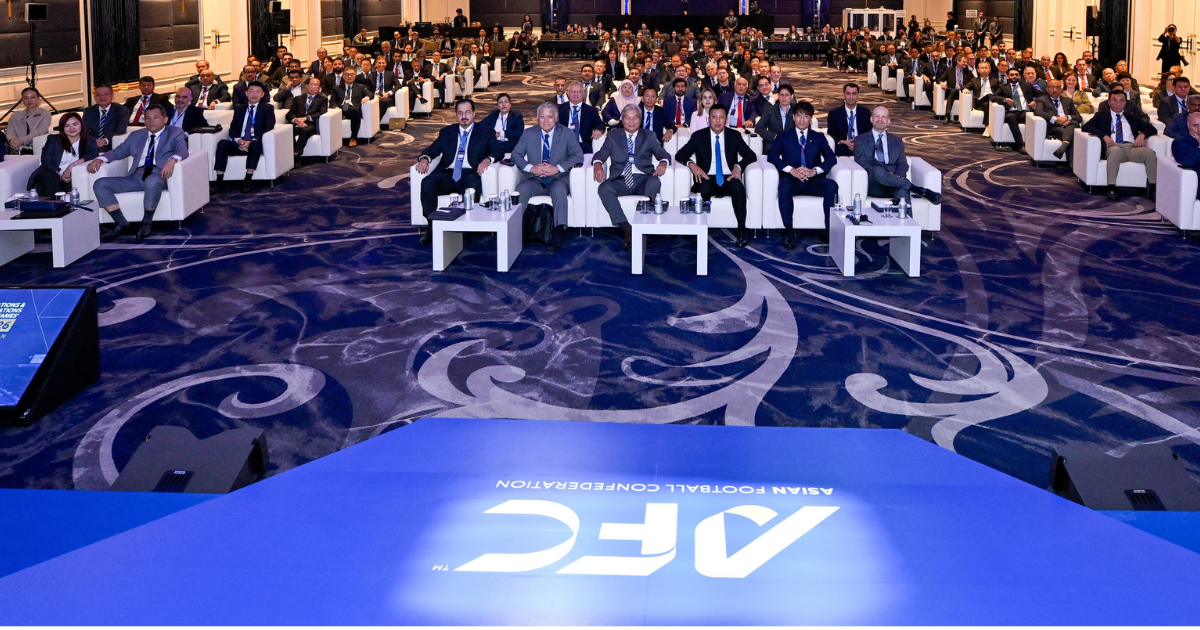
The Asian Football Confederation opened a two-day leadership conference in Tokyo, bringing together 120 football decision-makers to discuss governance, match integrity and artificial intelligence. The challenge for Asia’s national associations, including Afghanistan’s, is turning those discussions into stronger football administration.
21 October 2026
TOKYO, JAPAN | BY SAYER ZALAND
The Asian Football Confederation brought 120 football decision-makers together in Tokyo on Wednesday for a conference focused on a challenge that extends well beyond the pitch: how to run football more effectively in an era of technological change and growing demands for accountability.
The fourth AFC Member Associations and Regional Associations Presidents’ and General Secretaries’ Conference, held in Japan for the first time, opened with discussions on leadership, match-fixing risks and artificial intelligence.
For the continent’s football authorities, these are no longer separate concerns. Decisions made in federation offices increasingly influence the integrity of competitions, the management of resources and the development of the game.
AFC General Secretary Datuk Seri Windsor John told delegates that national and regional associations were central to the confederation’s efforts to improve standards.
He pointed to Asia’s expanding presence in international football and the development of continental club competitions, while emphasising the responsibility of administrators to build on that progress.
Japan Football Association President Tsuneyasu Miyamoto offered a perspective from one of Asia’s most established football systems, examining the experiences behind Japan’s sustained development.
The programme then turned to a less visible threat to the game.
Jennifer Mellors, an integrity specialist at Sportradar, examined how match-fixing has become increasingly difficult to detect as those involved adapt their methods.
Her presentation explored how technology can help identify suspicious activity across competitions, an issue that carries particular importance for organisations responsible for maintaining confidence in match results.
The discussion also raised a broader administrative question: whether football associations have the expertise and systems needed to respond when potential integrity concerns emerge.
Leadership was examined in a panel featuring representatives from Australia, Japan, Uzbekistan, Sri Lanka and Saudi Arabia.
The speakers discussed the demands placed on football administrators and the importance of effective decision-making in organisations operating under different financial, sporting and institutional conditions.
Artificial intelligence formed another part of the opening day’s programme.
Craig Hepburn, chief executive and founding partner of 1706 Studio, examined how AI could support strategic planning and day-to-day operations within football organisations.
Such technology may help associations organise information and improve administrative efficiency. Its value, however, will depend on how responsibly it is introduced and whether organisations have the capacity to use it effectively.
That distinction matters across Asian football, where national associations operate with widely differing resources and levels of institutional development.
For Afghanistan, the subjects discussed in Tokyo are relevant to the longer-term development of football administration, from competition oversight and technical planning to the management of limited resources.
The AFC’s announcement did not identify an Afghan representative among the participants or announce any Afghanistan-specific initiative. The potential relevance of the conference should therefore not be confused with a confirmed commitment or benefit for Afghan football.
South Asian Football Federation General Secretary Purushottam Kattel welcomed the discussions, particularly those concerning artificial intelligence and leadership.
His remarks reflected the importance of exchanging practical experience among associations facing different administrative challenges.
The conference will continue on Thursday with sessions covering women’s football, referee development, further applications of artificial intelligence, competition strategy and preparations for the 2027 AFC Asian Cup in Saudi Arabia.
Tokyo has provided a forum for discussing the future of football leadership. The more difficult task will begin when delegates return home and determine which ideas can be put into practice.
Source: Asian Football Confederation (AFC), official conference report, 21 October 2026.
Image caption: Football officials attend the AFC Member Associations and Regional Associations Presidents’ and General Secretaries’ Conference in Tokyo on October 21, 2026.
Image credit: Asian Football Confederation (AFC). Reuse rights must be confirmed for the selected image.