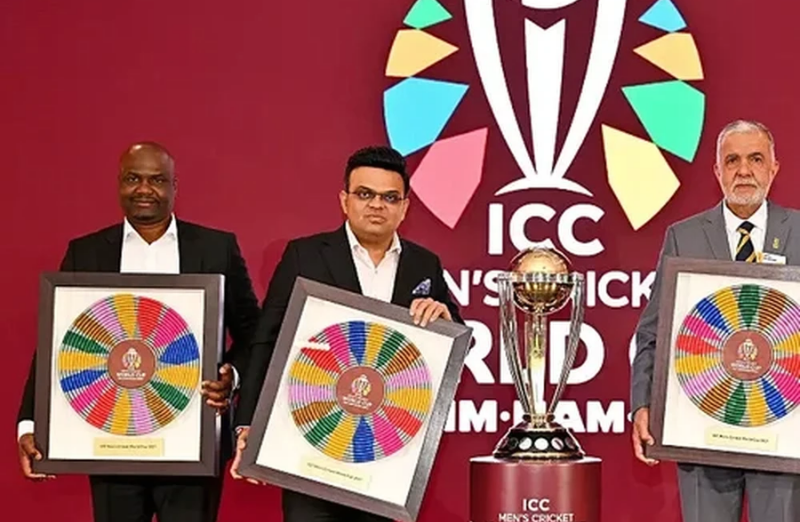
The International Cricket Council (ICC) has confirmed the 12 host cities for the 2027 ICC Men’s Cricket World Cup, which will be jointly hosted by South Africa, Zimbabwe and Namibia, marking the tournament’s return to Africa for the first time since 2003.
The 14-team tournament will be played under the theme “Three Nations, One Heartbeat”, celebrating the continent’s rich sporting culture while expanding cricket’s reach across southern Africa.
South Africa will host matches in Johannesburg, Centurion, Cape Town, Durban, Gqeberha, Bloemfontein, Paarl and KuGompo City, while Harare, Bulawayo and Victoria Falls will stage games in Zimbabwe. Windhoek will represent Namibia as the country’s sole host city.
A major addition to the tournament is Victoria Falls, where the newly constructed Fale Mosi-oa-Tunya International Cricket Stadium will make its World Cup debut. The 10,000-seat venue is expected to host domestic cricket before welcoming international matches ahead of the tournament.
The final is scheduled to be played either at The Wanderers Stadium in Johannesburg or Newlands Cricket Ground in Cape Town.
The 2027 edition will introduce a new three-stage competition format featuring 57 matches. The tournament will begin with a Super Series involving the three lowest-ranked teams before progressing to a group stage, where 12 teams will be divided into two groups. The leading teams will then advance to the Super 7 stage, followed by the semi-finals and final.
According to the ICC, the revised format is designed to increase competitiveness and enhance fan engagement throughout the tournament while showcasing cricket across multiple venues in Africa.