
By Salim Al Habsi, President of the Oman Journalists Association
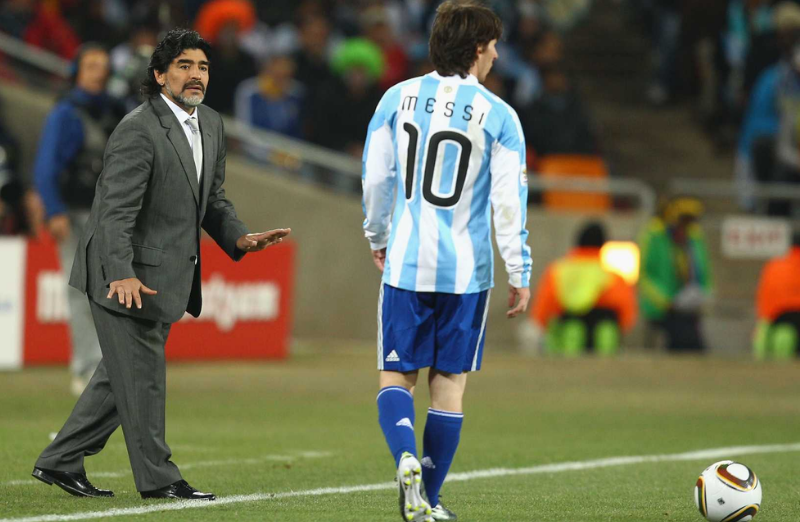
Football has produced countless legends, but few nations have shaped the game’s history as profoundly as Argentina. Across two generations, the country introduced two of the sport’s most influential figures: Diego Armando Maradona and Lionel Andrés Messi.
Separated by nearly three decades, the two No. 10s transformed football in different eras while leaving an enduring mark on Argentina’s identity and the global game.
Maradona’s journey began in Villa Fiorito, a working-class neighborhood on the outskirts of Buenos Aires. Messi’s story started in Rosario, where he overcame growth hormone deficiency before emerging as one of football’s greatest talents.
Although their careers unfolded in different tactical and cultural landscapes, both became symbols of creativity, resilience and excellence.
Two No. 10s, Two Eras
Football constantly evolves. Formations change, pressing intensifies, and the game’s tempo continues to increase. Yet Argentina’s iconic No. 10 shirt has remained synonymous with extraordinary talent.
Maradona and Messi approached the game differently, but each possessed an exceptional ability to influence matches.
Maradona thrived in chaos. He welcomed physical challenges, embraced pressure and often produced moments of brilliance when Argentina needed them most. His close control, balance and vision enabled him to escape defenders in seemingly impossible situations.
Messi, meanwhile, flourished in an era defined by tactical organization and relentless pressing. His intelligence, precise decision-making and extraordinary awareness allowed him to exploit spaces that often appeared invisible to others. Rather than relying solely on speed, he consistently outthought opponents.
Former Barcelona coach Pep Guardiola once remarked that Messi “sees what others simply cannot,” a description that reflects the Argentine captain’s unique football intelligence.
Different Styles, Same Influence
The contrast between the two legends lies less in quality than in style.
Maradona was instinctive and unpredictable, capable of changing a match through individual inspiration.
Messi combined technical brilliance with remarkable consistency, orchestrating attacks with precision while maintaining elite performance over more than two decades.
Despite their differences, both redefined the modern playmaker and expanded expectations of what a No. 10 could accomplish.
Leadership Beyond Words
Their leadership styles also reflected their personalities.
Maradona inspired through emotion and charisma. His confidence energized teammates and often lifted Argentina during its most difficult moments.
Messi led more quietly. For much of his international career, critics questioned his reserved demeanor, but his leadership ultimately emerged through example. He consistently set the standard through his work ethic, commitment and performances.
Both approaches proved successful because each was authentic.
Two World Cup Triumphs, Thirty-Six Years Apart
Maradona guided Argentina to FIFA World Cup glory in 1986, producing one of the tournament’s most celebrated individual performances.
Thirty-six years later, Messi completed his own World Cup journey by leading Argentina to the 2022 title in Qatar, adding the sport’s most coveted trophy to an already remarkable career.
Those victories, separated by more than three decades, created two defining chapters in Argentine football history.
Beyond Statistics
Comparisons between Maradona and Messi have become one of football’s enduring debates.
Yet reducing their legacies to statistics, trophies or individual awards risks overlooking their broader influence.
Maradona demonstrated how one player could inspire a nation through fearless creativity.
Messi showed that sustained excellence, humility and consistency could define greatness across an entire generation.
Each reshaped football in his own way.
A Legacy That Endures
Future generations will produce exceptional footballers, break records and lift trophies.
But Maradona and Messi occupy a place that extends beyond numbers.
They changed how football is played, understood and appreciated.
Their greatest legacy may not be the titles they won or the records they set, but the inspiration they gave millions of players and supporters around the world.
When the history of football is written decades from now, debates over the greatest player may continue. Yet one conclusion is likely to remain unchanged: Argentina gave the world two footballers whose influence transcended generations and forever altered the game’s history.
