
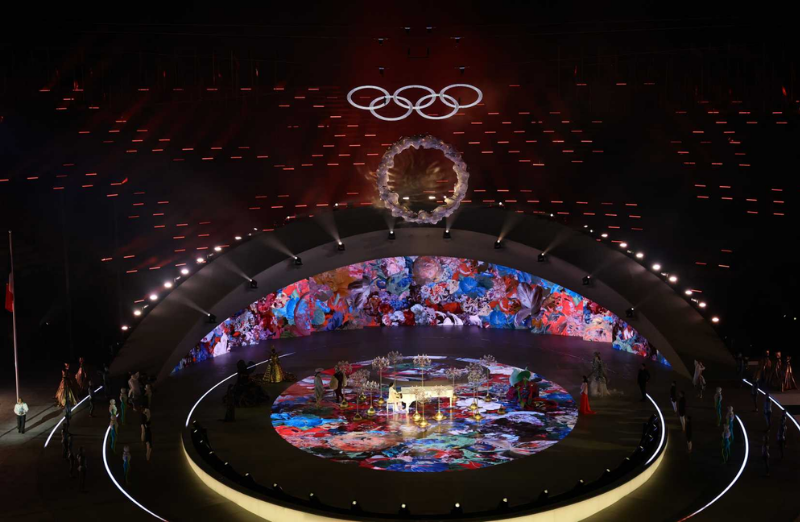
The Milano Cortina 2026 Winter Olympics delivered record global engagement, historic athletic performances, and the most gender-balanced Winter Games to date, with nearly 2,900 athletes competing across 116 medal events during 19 days of world-class competition.
By Sayer Zaland | ASJFNews
MILAN, February 26, 2026 — From the global fashion capital of Milan to the peaks of the Italian Alps, the Milano Cortina 2026 Winter Olympics delivered a celebration of sport that extended far beyond competition venues.
Over 19 days of action, approximately 2,900 athletes competed across eight sports and 16 Olympic disciplines, producing historic performances that elevated the global standard of winter sport. The Games featured 116 medal events, with a total of 740 medals awarded, alongside the debut of ski mountaineering in the Olympic Winter Games programme.
Eight new medal events were introduced, including ski mountaineering men’s and women’s sprint, mixed relay ski mountaineering, skeleton mixed team, women’s doubles luge, freestyle skiing men’s and women’s dual moguls, and women’s large hill individual ski jumping.
A total of 92 National Olympic Committees (NOCs), along with Individual Neutral Athletes (AIN), participated in the Games. Notably, Benin, Guinea-Bissau and the United Arab Emirates made their Winter Olympics debut appearances. Meanwhile, 29 NOCs secured medals, with Brazil and Georgia winning their first-ever Olympic Winter Games medals.
Brazil claimed a historic gold medal through Lucas Pinheiro Braathen in Alpine Skiing’s Men’s Giant Slalom event, while Georgia earned silver in Figure Skating’s Pair Skating through Anastasiia Metelkina and Luka Berulava.
Gender Equality Milestone
Milano Cortina 2026 marked the most gender-balanced Olympic Winter Games in history, with women accounting for 47 per cent of total athlete participation. The inclusion of four new women’s events brought the total number of women’s competitions to 50, compared to 46 at the Beijing 2022 Winter Olympics.
Additionally, 12 of the 16 sport disciplines achieved full gender balance.
Spectators and Volunteers
More than 1.3 million tickets were sold during the Games, while over 600,000 visitors attended Fan Villages across host regions.
A workforce of 18,000 volunteers — selected from more than 130,000 applicants — supported the successful delivery of the event. Of these, 51 per cent were female, 49 per cent male, with nearly half aged under 35 and representing 98 nationalities.
Media and Broadcast Reach
Coverage of the Games reached global audiences on an unprecedented scale. A total of 24 Media Rights-Holders (MRHs) and more than 80 broadcast sublicensees participated in delivering coverage, supported by 6,500+ production hours from Olympic Broadcasting Services (OBS).
More than 10,000 broadcast personnel were accredited, alongside 2,536 members of the press from 803 news organisations and 694 photographers.
In Italy, two out of three viewers watched Games coverage on RAI, surpassing domestic viewership levels recorded during Paris 2024 Summer Olympics.
In the United States, the Games averaged 24.1 million viewers across NBC, Peacock and NBCUniversal digital platforms — marking the most-watched Winter Games at this stage since 2014 and representing a 93 per cent increase from Beijing 2022.
In Japan, coverage reached more than 92 million viewers across Japan Consortium’s television networks.
Digital Engagement
Digital platforms also recorded significant engagement levels. Around 110 million users interacted with Olympics web and app platforms, setting a new Winter Games record. The Olympics App registered 120 million opens and ranked as the number-one sports application across more than 75 territories.
Across official Olympics social media platforms, over 10 billion engagements were generated during Milano Cortina 2026 — nearly tripling the figures recorded at Beijing 2022 — alongside 8.7 million new followers globally.