
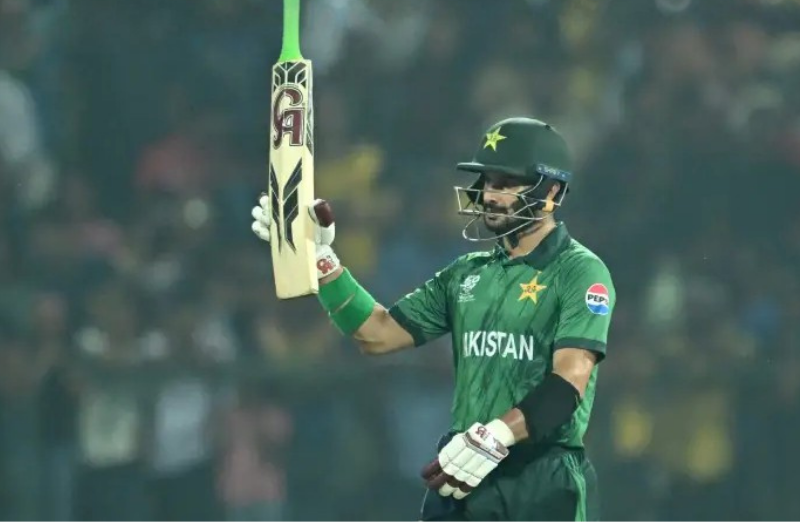
Five-run victory over Sri Lanka fails to secure semi-final berth for either side
Kabul | Farzana Momand
Pakistan closed their ICC Men’s T20 World Cup 2026 campaign with a narrow five-run victory over Sri Lanka, a result that offered brief consolation but confirmed elimination for both teams in a group stage defined by fine margins and unforgiving arithmetic.
Sri Lanka, batting first, posted 207 for 6 in 20 overs. Callum Robinson’s 65 off 42 deliveries anchored the innings, yet the absence of sustained partnerships prevented the total from stretching beyond reach. In a tournament where acceleration phases determine outcomes, Sri Lanka’s inability to capitalize fully on a strong platform proved consequential.
Pakistan’s response was assertive. Sahibzada Farhan produced a commanding 100 from 60 balls, stabilizing the chase with measured control, while Fakhar Zaman’s 84 off 42 deliveries injected momentum at decisive moments. Pakistan reached 212 for 5 in 20 overs, sealing victory in a high-scoring encounter that maintained tension until the final overs.
Despite securing three points, Pakistan finished third in the group due to an inferior net run rate. Earlier inconsistencies, particularly in bowling containment and match management, ultimately carried greater weight than the final result. The margin of victory, though sufficient for the match, was insufficient for progression.
Sri Lanka’s exit was more definitive. As hosts, they concluded the tournament without a point, registering a third consecutive defeat. The failure to convert competitive phases into complete performances reflected broader structural concerns that extend beyond a single fixture.
The ICC Men’s T20 World Cup 2026 has reinforced the growing centrality of net run rate in determining advancement from tightly contested groups. With compressed schedules and limited matches, cumulative performance margins often outweigh isolated victories. For both Pakistan and Sri Lanka, the campaign illustrated the premium placed on consistency, strategic depth, and sustained control in modern T20 cricket.