
League A group winners to claim first four UEFA spots in compressed World Cup qualifying sprint
Germany | Sayer Zaland
Europe’s pathway to the FIFA Women’s World Cup Brazil 2027 will unfold at a pace more akin to a short-distance race than a drawn-out campaign, underscoring the increasing competitiveness and structural intensity of the women’s international calendar. With qualifying set to begin on 3 March, UEFA’s League A will determine the first four European participants by 9 June, compressing ambition, legacy and institutional pressure into a decisive three-month window.
The format mirrors the Women’s Nations League structure, with four teams per group facing each other home and away during double-header windows in March, April and June. Only group winners will secure direct qualification at this stage. The remaining seven automatic berths, along with one place in the intercontinental play-off tournament, will be decided through a 32-team play-off phase between October and December.
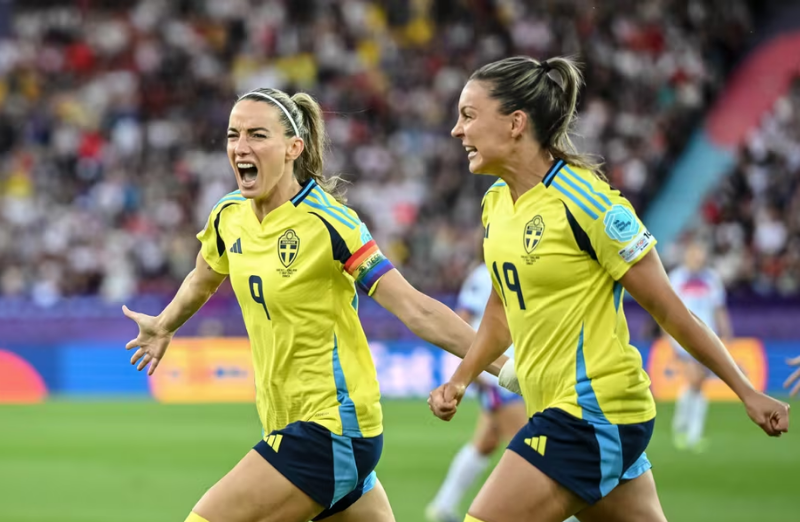
Group A1 brings together Denmark, Italy, Serbia and Sweden in a section that combines experience with aspiration. Sweden, ever-present at the World Cup finals, enter with a historical edge over Denmark in qualifying encounters. Serbia, by contrast, seek a maiden appearance, reflecting the broader expansion of competitive depth across Europe’s middle tier. The presence of emerging projects alongside established programs illustrates how development structures, not only tradition, increasingly shape qualification outcomes.
Group A2 offers a study in unrealised potential. France, still pursuing a first major title despite sustained investment and squad depth, confront the Netherlands, runners-up in 2019 and rejuvenated under new leadership. Poland and the Republic of Ireland, both promoted to League A, embody the volatility introduced by the Nations League system, which has accelerated upward mobility while exposing elite teams to greater competitive risk.
The most politically and competitively charged pairing lies in Group A3, where Spain and England renew a rivalry forged in successive global and continental finals. Their recent exchanges have defined the modern era of European women’s football, shifting power balances and tactical standards. Iceland and Ukraine enter as challengers, yet their inclusion signals UEFA’s broader recalibration, in which developmental strides can quickly translate into top-tier opportunity.
Group A4 reunites Germany and Norway, two nations with deep historical imprints on the tournament’s legacy. Germany, seeking to narrow the performance gap with reigning world champions Spain, approach qualification as both reconstruction and reaffirmation. Austria and Slovenia, meanwhile, pursue inaugural World Cup appearances, reflecting how sustained domestic investment can reposition smaller federations within Europe’s elite tier.
UEFA’s decision to align World Cup qualifying with the Women’s Nations League format reflects a structural shift toward competitive parity and calendar efficiency. The compressed schedule amplifies the consequences of marginal lapses, placing emphasis on squad depth, tactical adaptability and institutional continuity. As Europe determines its first four representatives for Brazil 2027, the process highlights a broader transformation in women’s football governance: qualification is no longer a gradual ascent but an immediate test of systemic resilience.