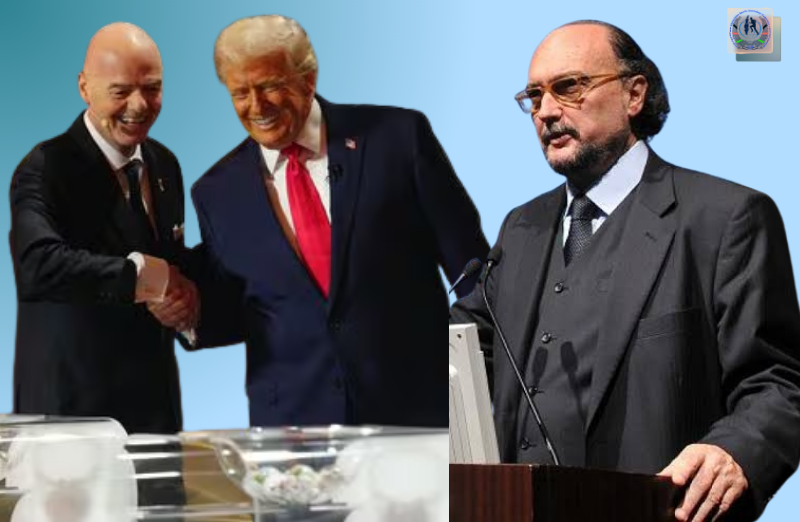
AIPS President Gianni Merlo has raised concerns over FIFA’s reported plans to expand its commercial operations in the United States, warning that football’s global governance should not become driven primarily by business interests.
In an editorial published by the International Sports Press Association (AIPS), Merlo questioned the proposed creation of FIFA Forward Enterprise (FFE), a commercial arm reportedly planned to be headquartered in Florida. He argued that such a structure could prioritize commercial interests over the broader responsibilities of world football.
Merlo also referred to reports surrounding U.S. President Donald Trump’s alleged intervention before the United States’ World Cup match against Belgium, suggesting the incident has fueled concerns about growing political influence in football. FIFA has not publicly confirmed any connection between the reported phone call and its future commercial plans.
The AIPS president further pointed to the increasing number of American-owned football clubs in Europe, noting that nine of Italy’s 20 Serie A clubs and 11 of the Premier League’s 20 clubs are under American ownership. While acknowledging these investments are legitimate commercial ventures, he questioned whether they reflect a broader shift in football’s economic landscape.
Merlo stressed that while FIFA has a responsibility to generate revenue and support its member associations financially, it should also encourage national federations to develop sustainable local funding rather than relying heavily on central distributions.
He acknowledged the success of the 2026 FIFA World Cup in the United States, Canada and Mexico, citing strong attendances and global television audiences, but cautioned that commercial success should not overshadow football’s ethical principles and global identity.
Concluding his editorial, Merlo argued that football should preserve its traditional sporting values and warned against adopting aspects of the American professional sports entertainment model that, in his view, could undermine the integrity of the game.