A training programme for young sports journalists in Jeddah has put one of the profession’s most urgent questions at the centre of the conversation: what distinguishes journalism when technology has made creating convincing content easier than ever?
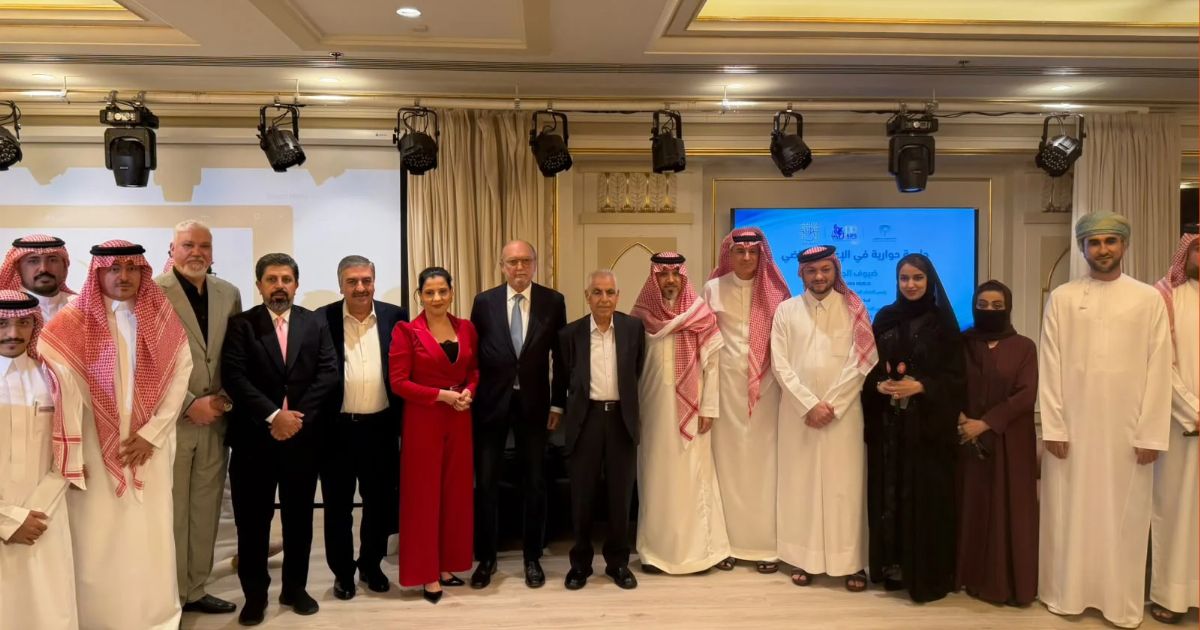
The two-day programme, organised by the Arab Sports Press Association and the Saudi Sports Media Federation in cooperation with AIPS, brought together young journalists from across the Gulf during the 27th Arabian Gulf Cup.
Digital content creation was the formal subject of the programme, but discussions quickly moved beyond production skills to storytelling, verification, artificial intelligence and the changing responsibilities of journalists.
Dima Al-Sayeh, who served as a trainer during the programme, focused on how journalists turn information into stories, identify angles that others have missed and adapt their work for audiences increasingly consuming sport through fast-moving digital platforms.
But the larger issue was not simply how journalists can use new technology. It was what remains distinctly journalistic when clubs, athletes and influencers can communicate directly with audiences and artificial intelligence can generate text, photographs, voices and video within seconds.
That question became more prominent during a concluding panel moderated by Al-Sayeh and featuring AIPS President Gianni Merlo, Arab Sports Press Association President Dr. Turki Al-Awwad and Vice President Dr. Hadi Abdullah.
Merlo placed credibility at the heart of journalism’s response to technological change.
Sports journalism has already lived through major changes in publishing, distribution and platforms. Artificial intelligence, however, introduces another dimension to verification because technology can now create material that resembles the evidence journalists traditionally relied upon.
A photograph can be artificially generated, a voice cloned and video manipulated. The challenge for emerging journalists is therefore increasingly not only to verify information, but also to establish whether the material presented as evidence is authentic.
The discussion extended beyond daily reporting.
Abdullah raised the question of sports archives and what AI-assisted restoration or alteration could mean for the historical record.
Sports archives provide evidence from which future journalists and researchers reconstruct sporting history. The growing ability to modify historical photographs and footage creates questions over how original material should be preserved, how altered material should be labelled and how future researchers can distinguish an authentic record from an AI-modified version.
The programme also reflected a broader attempt to prepare a new generation of Arab sports journalists for that changing environment.
Al-Awwad said the Arab Sports Press Association plans to train more than 500 media professionals as part of its wider development strategy.
That ambition places the emphasis not simply on teaching journalists how to operate new digital tools, but on developing the editorial judgement needed to decide when and how those tools should be used.
The Association unveiled a new institutional identity during the closing activities in Jeddah, while Al-Sayeh was recognised for her contribution as a trainer and moderator.
The more consequential outcome, however, was the debate generated among the young journalists themselves.
As producing digital content becomes faster and increasingly automated, the professional advantage of journalism may depend less on the ability to produce material and more on the qualities technology cannot independently guarantee: verification, editorial judgement, context and accountability.
For sports journalism, that makes training the next generation about more than learning the newest platform or production tool. It is increasingly about protecting the credibility on which journalism depends.