
Arrival of foreign athletes highlights Afghanistan’s effort to use sport as a platform for regional engagement and international outreach
Kabul | By Sara Amiri AIPS Member
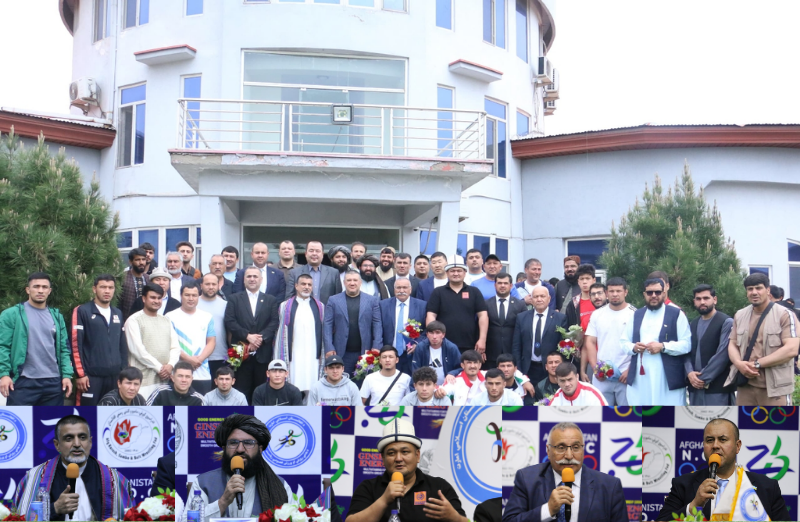
Foreign athletes and sports officials from across the region arrived in Kabul ahead of the International Traditional Wrestling Festival, marking the formal opening phase of a multi-day competition that Afghan authorities are presenting as a sign of growing stability and regional cooperation.
The welcoming ceremony, held on Wednesday (April 22, 2026), was attended by senior leadership of the General Directorate of Physical Education and Sports. Ahmadullah Wasiq, head of the institution, welcomed the delegations and thanked participating countries for traveling to Afghanistan, assuring them of full hospitality and organizational readiness.
The tournament is scheduled to begin on Thursday in Kabul and will continue for three days, featuring athletes from Afghanistan, Uzbekistan, Kyrgyzstan, Tajikistan, Turkmenistan, Iran, and Turkey.
The festival, centered on traditional wrestling disciplines including Kurash, brings together approximately 60 athletes from seven countries. It is accompanied by official engagements, including a press conference where Afghan officials and international representatives outlined broader ambitions tied to the event.
Wasiq described the festival as evidence of improved conditions for hosting international sports competitions, emphasizing that Afghanistan is prepared to organize events in a secure and structured environment. He also highlighted government support for the sports sector, including the establishment of a dedicated body for traditional sports and the expansion of related programs across the country.
Sayed Mahmood Zia Dashti, President of the National Kurash Federation, addressed international perceptions of Afghan sport, arguing that negative media narratives do not reflect current realities. While pointing to regional participation as a positive step, he acknowledged that broader international involvement remains limited and identified expansion to up to 20 countries as a future objective.
Kourosh Khosravyan, a sports representative from Iran, described the competition as rooted in shared regional traditions with a wide following. He said the event carries a message of peace and friendship, while also noting visible progress in Afghanistan’s sporting environment and improved conditions for hosting such competitions.
A representative from Kyrgyzstan highlighted the competitive level of Afghan wrestlers and emphasized the cultural dimension of the event, including hospitality and people-to-people interaction. He expressed interest in organizing similar competitions in Kyrgyzstan with the participation of Afghan athletes.
Officials from Turkey and Uzbekistan also welcomed the initiative. Miranshah, representing Uzbekistan and attending for a second time, pointed to previous successes of Afghan wrestlers in regional competitions as an indication of continued development.
The Kabul wrestling festival reflects a broader strategic use of sport as an instrument of soft power in Afghanistan’s current context. With limited diplomatic engagement, such events serve as controlled platforms through which authorities attempt to project stability and rebuild regional ties.
The structured reception of foreign delegations and emphasis on hospitality highlight an effort to shape external perceptions through direct experience rather than formal diplomacy. This approach, while limited in scale, represents an alternative channel of engagement in a constrained international environment.
The focus on traditional wrestling disciplines such as Kurash is particularly significant. These sports, deeply rooted across Central and South Asia, provide Afghanistan with a culturally familiar framework for regional integration, allowing participation without the institutional barriers associated with global sports systems.
However, the level of participation also underscores persistent limitations. Despite official optimism, the presence of seven countries reflects cautious regional engagement rather than broad international reintegration. Ambitions to expand participation will likely depend on developments beyond the sporting domain.
At the domestic level, the government’s investment in traditional sports and the creation of dedicated administrative structures indicate an effort to consolidate cultural identity through athletics. Whether these initiatives can evolve into sustainable, inclusive, and professionally managed systems remains a defining question for the future of Afghan sport.