AFC Changes Asian Cup Calendar, Raising Planning Questions for Afghanistan
The Asian Football Confederation has approved moving the Asian Cup to even-numbered years from 2032 and changing when its elected leadership takes office. The reforms will affect the continental framework in which Afghanistan competes, although no immediate changes to Afghanistan's qualification pathway or financial support have been announced.
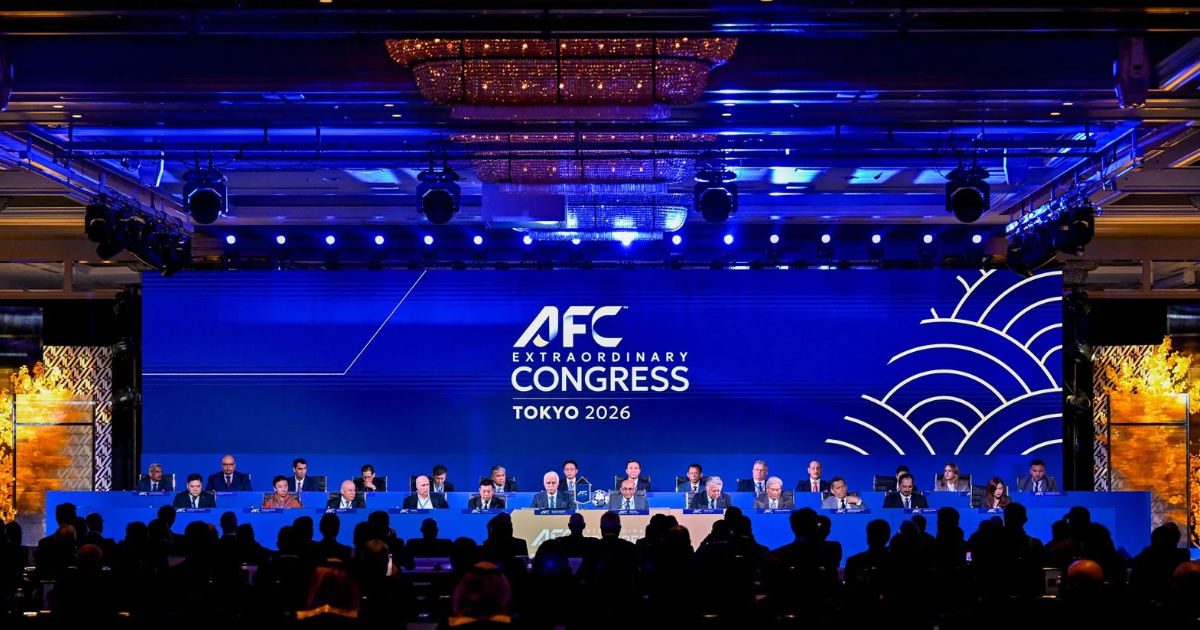
The Asian Football Confederation (AFC) has approved changes to the Asian Cup calendar and its leadership arrangements, introducing a new administrative cycle that will affect the football environment of member associations, including Afghanistan.
Delegates approved the statutory amendments unanimously at an Extraordinary Congress held in Tokyo on Friday, 23 October.
The most significant sporting change is the decision to move the AFC Asian Cup from its traditional odd-numbered-year schedule to an even-numbered-year cycle beginning with the 2032 tournament.
The decision forms part of the AFC's response to changes in FIFA's international calendar and is intended to align the confederation's leadership cycle with its flagship national-team competition.
For Afghanistan, the change establishes a different long-term continental calendar. However, it does not constitute a change to Afghanistan's qualification status or guarantee additional opportunities for its national team.
A different calendar for Asian football
The Asian Cup has traditionally been associated with an odd-numbered-year cycle, although individual editions have previously been rescheduled.
Under the newly approved framework, the competition will move to even-numbered years beginning in 2032.
The 2027 Asian Cup remains scheduled to take place in Saudi Arabia.
The shift means national associations will eventually have to account for a different continental tournament cycle when developing their longer-term football programmes.
For Afghanistan, this could become relevant to national-team preparation, domestic competition scheduling and player-development planning.
However, the AFC announcement does not specify new qualification regulations or a revised pathway for Afghanistan to reach the tournament.
Any practical consequences for the Afghan national team will depend on subsequent competition regulations and scheduling decisions.
Leadership elections and accountability
The reforms also change the transition between AFC leadership terms.
Elections for the confederation's principal leadership positions will still take place in 2027, but successful candidates will not assume office until 1 January 2028.
The AFC describes the new leadership period as the 2028–2032 term.
Current executive members, elected for the 2023–2027 cycle, will continue serving until the end of December 2027.
The AFC says these arrangements are necessary to provide continuity in the organisation and delivery of the Asian Cup.
But the governance implications warrant further scrutiny.
Independent football publication The Asian Game has questioned how the stated 2028–2032 period will operate alongside the existing four-year leadership provisions.
The report also raised questions about whether the change could extend the period served by some current officials compared with the earlier election cycle.
The AFC's announcement confirms the approved transition but does not fully explain the date on which the new leadership mandate will expire.
For member associations, clear election procedures and defined leadership terms are important elements of transparent continental governance.
What the reforms mean for Afghanistan
The Afghanistan Football Federation is a member of the AFC and operates within its competition and governance framework.
Changes to continental scheduling and leadership therefore form part of the institutional environment in which Afghan football must plan its future participation.
However, the Tokyo Congress did not announce a specific reform, development project or financial allocation for Afghanistan.
Nor did it identify a direct change to the country's representation in AFC competitions.
The immediate impact should therefore not be overstated.
The more relevant questions for Afghan football will concern how the future Asian Cup calendar affects national-team planning, and whether the AFC's revised governance arrangements improve the clarity and accountability of decisions affecting its members.
During the Congress, AFC President Shaikh Salman bin Ebrahim Al Khalifa also expressed support for FIFA President Gianni Infantino's re-election bid.
AFC backs FIFA president
The endorsement was a political position within football governance and was separate from the statutory amendments approved by delegates.
For Afghanistan and other AFC members, the consequences of the Tokyo decisions will become clearer as the confederation publishes the detailed arrangements governing its new leadership cycle and future competition calendar.
The central issue is not simply whether the AFC has changed its rules, but how those rules will operate and whether they provide greater predictability for the associations required to follow them.