AFC’s Tokyo Conference Ends with Focus on Women’s Football and Governance
Asian football leaders concluded a two-day conference in Tokyo with discussions on women's football, referee development, technology and competition standards. The central question for member associations, including Afghanistan, is how those discussions will translate into practical improvements rather than remain statements of ambition.

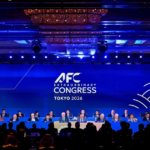
The Asian Football Confederation (AFC) concluded its two-day conference for national and regional football association leaders in Tokyo on Thursday, placing women's football, referee development and competition management at the centre of discussions about the future of the game across Asia.
The fourth AFC Member Associations and Regional Associations Presidents' and General Secretaries' Conference brought together approximately 120 participants for discussions on leadership, governance, technology and football development.
Hosted in Japan for the first time, the conference followed an opening day devoted to administrative leadership, innovation and the potential use of artificial intelligence.
The concluding programme examined how associations could improve their technical and organisational capabilities as football competitions expand and expectations for professional administration increase.
While the AFC highlighted cooperation and knowledge-sharing, the conference announcement did not identify new financial commitments or country-specific projects arising from the concluding sessions.
That distinction is important for assessing whether the discussions lead to measurable changes within national football associations.
Women's football moves higher on the agenda
Women's football was among the central subjects of the final day's programme.
Michele Kang, founder of Kynisca and an investor in women's football clubs including Washington Spirit, OL Lyonnes and London City Lionesses, addressed the international development of the women's game.
Bai Lili, the AFC's Head of Women's Football Development, outlined the confederation's work to support the growth of women's football across Asia.
The discussions came amid growing international investment in women's competitions, professional clubs and player development.
However, conditions remain uneven across the continent, with national associations operating in different sporting, financial and institutional environments.
For Afghanistan, the subject has particular relevance because Afghan women's footballers continue to face significant barriers to domestic participation and sustained football development.
The AFC's conference report did not announce a new programme specifically for Afghan women footballers.
The significance of the discussions for Afghanistan will therefore depend on future policies and practical opportunities rather than the conference presentations alone.
Refereeing and competition standards
Hirokazu Abe, Head of the AFC Referees Department, outlined the confederation's approach to improving referee development through strategic investment.
Referee education and consistent application of competition rules are important parts of maintaining the credibility of football competitions.
The programme also included a presentation by Jessie Dai Shengying, Head of the AFC Competitions Strategy Department, on competition planning and regulatory standards.
For national associations, effective competition administration requires more than organising match schedules.
It also involves clear regulations, trained officials, reliable disciplinary procedures and consistent oversight.
These are relevant considerations for Afghanistan's domestic football competitions, although the Tokyo conference did not announce any Afghanistan-specific reforms.
Artificial intelligence and institutional capacity
Craig Hepburn, Chief Executive Officer and founding partner of 1706 Studio, delivered a practical session examining how emerging technologies, including artificial intelligence, could be used in football organisations.
The presentation followed broader discussions on technology during the opening day.
For football associations, such tools may offer opportunities to improve administrative processes, information management and operational planning.
But the benefits will depend on available resources, staff training and responsible implementation.
Technology cannot replace effective governance or clear accountability.
Robert Skinner, Chief of Partnerships and Global Engagement at the United Nations, also discussed how football organisations can support wider social and sustainable development objectives.
The session emphasised the potential relationship between football administration and social responsibility.
Asian Cup preparations also examined
Preparations for the AFC Asian Cup Saudi Arabia 2027 featured in the final programme.
Mohammed Q. Alghamdi, Media Director of the tournament's Local Organising Committee, outlined aspects of the preparations for the competition.
The Asian Cup remains one of the AFC's major international tournaments, requiring coordination across sporting operations, media services and participating associations.
The conference concluded with delegates reflecting on cooperation between football administrators across the continent.
For Afghanistan and other developing football associations, the practical value of such meetings will be determined by whether the ideas discussed are followed by better training, stronger competition structures and more opportunities for players.
Tokyo provided a forum for exchanging experience. The next test for Asian football's administrators is turning those discussions into demonstrable results.