IJF President Vizer Warns of AI Risks to Journalism and Condemns Violence in Judo
International Judo Federation President Marius Vizer has defended creative journalism and warned of the potential risks of artificial intelligence in an interview with AIPS. He also said the federation was awaiting a German disciplinary report following an assault that left judoka Timo Cavelius seriously injured.
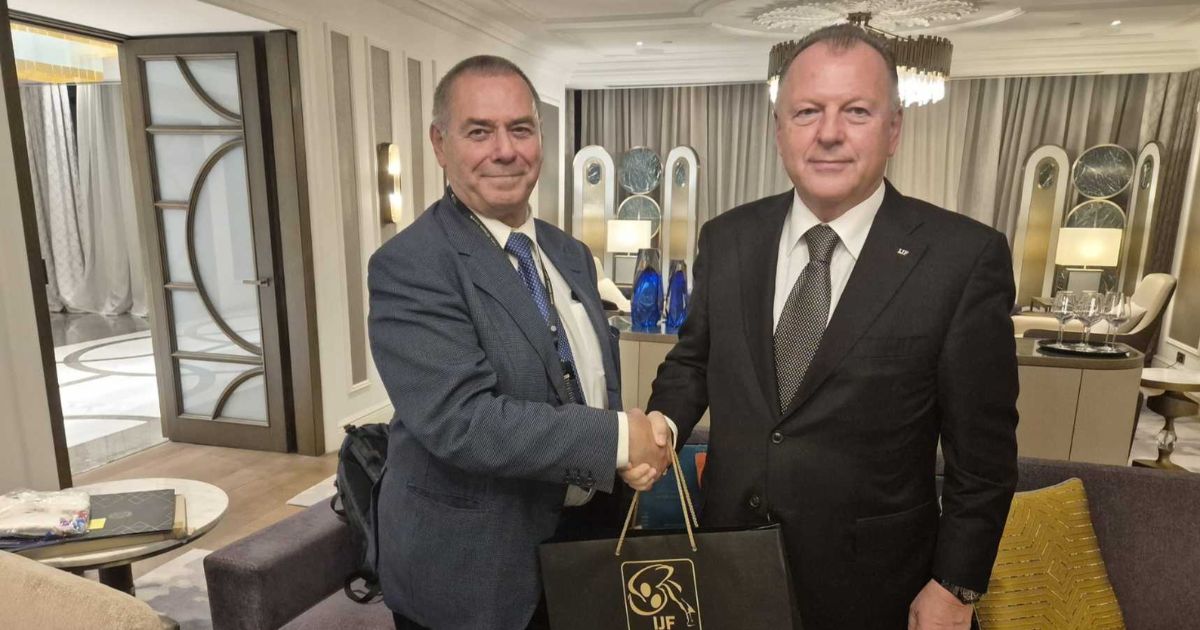
International Judo Federation President Marius Vizer has warned that artificial intelligence could pose risks to sports journalism while insisting that creativity will remain essential to the profession.
Speaking in an interview with AIPS Executive Committee member Josef Langer, published on 12 October 2026, Vizer also addressed violence in judo, the commercial challenges facing the sport and the role of media organisations in its international development.
The 67-year-old president, who has led the IJF since 2007, argued that improvements in television presentation and competition rules had made judo more accessible to audiences.
But he questioned whether technology could replace the judgement and originality of journalists.
“Journalists will still need to be creative in the future,” Vizer said, adding that artificial intelligence could have dangerous consequences in some areas.
His comments came during a discussion of judo's relationship with the media and the federation's efforts to make the sport more attractive to broadcasters, sponsors and commercial partners.
Vizer credited changes to competition presentation, including the use of blue and white uniforms and clearer rules, with helping audiences follow the sport.
He also emphasised the IJF's longstanding cooperation with the International Sports Press Association (AIPS), describing the organisation as an important representative of sports journalists worldwide.
The interview turned to a serious disciplinary case in Germany involving national-team judoka Timo Cavelius.
According to the account presented to Vizer, a Georgian judoka struck Cavelius after a German Bundesliga match, causing a double jaw fracture and dental injuries. Cavelius subsequently missed the World Championships in Baku.
Vizer said the IJF was awaiting a report from the German Judo Federation before its disciplinary commission considered the matter.
“There is no place for violence in sport. Especially not in judo,” he said.
The case presents a test of the sport's stated commitment to respect and athlete welfare, particularly when misconduct occurs outside major international championships.
Vizer also reflected on the financial position of the IJF when he became president in 2007. He said the federation had been carrying approximately $400,000 in debt and that his administration introduced a two-year recovery plan before developing the IJF World Tour.
The federation has since expanded its international competition programme, although Vizer acknowledged the continuing difficulty of attracting hosts in some established European judo nations.
He identified the cost of staging major events as a significant obstacle and said judo needed to compete more effectively for sponsors and commercial attention.
The interview also outlined the planned World Championships calendar, with Astana scheduled for 2027, Lausanne for 2028 and Georgia for 2029.
At the Baku championships, Vizer highlighted the scale of international participation, with approximately 600 athletes from almost 100 countries, according to figures cited in the interview.
Japan's success, including seven of the 14 individual gold medals and victory in the mixed-team event, was also discussed.
Taken together, Vizer's remarks placed the future of judo beyond competition results alone: the sport's leadership must balance commercial growth, athlete protection and credible media coverage while maintaining the values it claims to represent.
AIPS — interview with IJF President Marius Vizer by Josef Langer; adapted for ASJF NEWS.