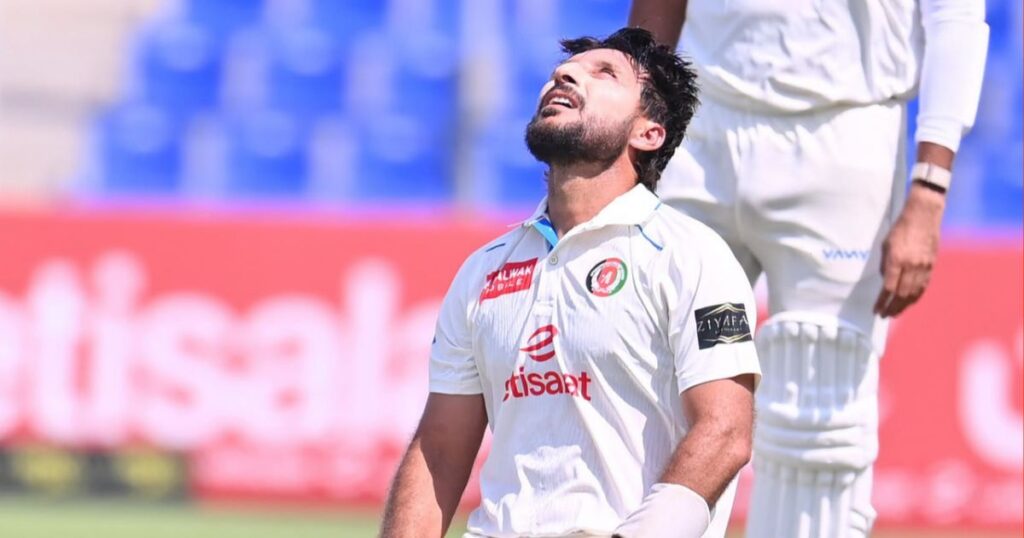
Afghanistan’s Road to 2027 Runs Through Its Unfinished Work
September’s defeats exposed weaknesses in Afghanistan’s batting and raised questions about the depth behind its leading players. The World Cup programme must now turn those warnings into clearer roles, stronger pace options and preparation that goes beyond a fixture list.
Afghanistan ended September with a heavy defeat in Delhi and an Asian Games campaign cut short in Japan. The two setbacks were different, but together they sharpened a question that will follow the team towards the 2027 World Cup: how much of its success can it reproduce when its leading players cannot rescue a match?
India’s 3–0 T20I series victory ended with Afghanistan dismissed for 94 in a 127-run defeat. At the Asian Games, Afghanistan lost to Nepal before their quarter-final against India was abandoned; India advanced as the higher-seeded team.
That distinction matters. Afghanistan were beaten by Nepal, but were not beaten by India in the quarter-final. Nor were the two Afghan squads identical: the Asian Games side was an Afghan Abdalyan group led by Darwish Rasooli, with a substantial development component.
Treating both campaigns as one uninterrupted failure would obscure what they actually tested: the senior side’s ability to compete against India and the strength of the players coming through behind it.
A warning, not a verdict
The evidence from one-day cricket is more encouraging. Afghanistan won their August ODI series in Ireland 4–0. In the final match, Rahmat Shah and Sediqullah Atal shared a 201-run partnership after the openers fell with 22 on the board.
That recovery is important counter-evidence to any claim that Afghanistan cannot handle pressure. It also shows what a successful response looks like: two batters sustaining the work together.
T20 defeats cannot establish that the ODI side is destined to fail. But neither should an ODI series victory close discussion of weaknesses that stronger opponents may expose. Afghanistan need to identify which problems recur across formats and which belong to a particular batting role or match situation.
The middle order needs a job description
The middle order is where Afghanistan’s ambitions meet some of their hardest selection choices.
A batter arriving after early wickets must rebuild without surrendering the scoring rate. The same player, entering behind a strong opening partnership, may need to attack immediately. Selecting someone for the position requires evidence that they can perform the role being asked of them.
Afghanistan’s review should examine how often the middle order converts a recovery into a competitive total, how effectively it rotates strike against spin and how reliably it finishes an innings. One rescue effort should not conceal repeated failures around it.
The October squad announcement signals change: Darwish Rasooli was omitted from the ODI and T20I groups, while Mohammad Nabi was left out of the T20I squad but retained for ODIs.
Those decisions do not prove that the problem has been solved. The test is whether replacements receive defined responsibilities and enough opportunity to establish themselves. Constant changes can make it difficult to distinguish a struggling player from a poorly designed role.
Pace depth cannot wait
Former coach Jonathan Trott identified a longer-term concern on leaving his post in February: Afghanistan needed more reliable seamers to support its spinners and cope with different conditions at the 2027 World Cup.
The tournament will be hosted by South Africa, Zimbabwe and Namibia. Conditions will vary, but an attack must be able to respond when spin alone cannot control an innings.
Afghanistan need more than additional fast-bowling names on a squad sheet. They need bowlers trusted with distinct tasks: movement with the new ball, control through the middle overs and execution at the finish.
That requires sustained development, fitness management and meaningful overs in competitive matches. A young quick cannot become a dependable alternative if his opportunities arrive only when established players are unavailable.
The coach’s concern reaches beyond the dressing room
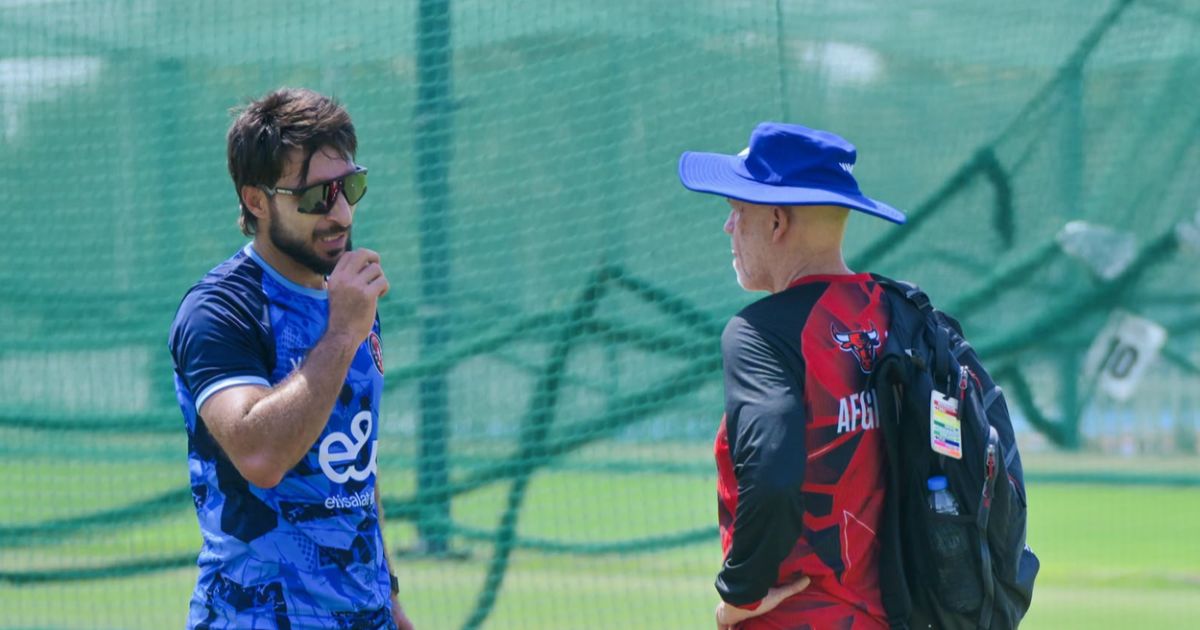
Richard Pybus, appointed head coach in February, has pointed towards the conditions in which players learn.
In comments reported by PTI during the India series, he called for better domestic pitches, improved scoring rates and fewer dot balls. His argument connects international performance to the quality of practice at home.
For the ODI programme, the implication is broader than hitting more boundaries. Preparation must develop the ability to rotate strike, rebuild against demanding bowling and accelerate without losing control of the innings.
A fixture list is therefore only part of the answer. The ACB has arranged an October ODI tri-series with Bangladesh and Zimbabwe and explicitly described it as preparation for 2027.
That contradicts a claim that preparation is absent. It does not establish that preparation is sufficient. The programme still needs to test combinations, expose reserve players to responsibility and include conditions relevant to the World Cup.
Leadership needs authority and accountability
Rahmat Shah leads the ODI side; Ibrahim Zadran captains the T20I team. Their responsibilities differ, but both need a clear working relationship with the coach and selectors.
Captains must be able to change a plan during a match, judge when to attack and communicate expectations before a difficult situation develops. They must also be assessed on those decisions, rather than on personal runs alone.
The governance question deserves scrutiny without unsupported accusations. In October 2025, Trott publicly raised concerns about communication and his involvement in selection. He subsequently said the misunderstanding had been resolved.
That episode is documented history. It is not evidence that officials are improperly interfering with Pybus’s team today.
The principle remains relevant: selectors should explain their cricketing criteria, the coach should contribute to squad planning, and the captain should understand the resources available. Administrative oversight must not blur responsibility for technical decisions.
The same standard applies to senior players. Their experience should inform the team; their reputations should not exempt them from selection criteria. There is no substantiated evidence in the material reviewed that players control selection. It would be unfair to present that suspicion as fact.
Opportunity must become development
The Asian Games squad gave younger players an international assignment. Its defeat by Nepal should lead to an examination of what they need next, rather than a blanket judgement on their future.
Afghanistan need a route from domestic performance to sustained international responsibility. That means evaluating players in the format and role for which they are being considered, then supporting them through a fair period of adaptation.
Team combination should follow the same logic. The strongest eleven is not necessarily the eleven most recognisable names. It is the group that covers the demands of an innings, offers bowling alternatives and can absorb an injury or a poor day without losing its structure.
Pressure handling belongs inside that preparation. Collapses are observable; claims about a team’s courage or mentality require much more evidence. Coaches can rehearse difficult chases, recovery partnerships and defensive bowling situations, then review the decisions players make.
With roughly a year until the World Cup, Afghanistan have time to improve. The task is measurable: establish a functioning middle order, develop trusted pace cover, clarify leadership responsibilities and give emerging players opportunities with a purpose.
The recent defeats should neither be dismissed nor allowed to define the team. Their value will depend on what changes before the next major test.
Sources: ACB squad announcements and match reports; ICC tournament reports and coaching coverage; PTI reporting published by Rediff; IANS reporting published by NDTV.
Source links
- ACB: India series results
- ICC: Asian Games Nepal match
- ICC: abandoned quarter-finals
- ACB: Asian Games squad
- ACB: Ireland ODI series
- ACB: October squads and preparation
- ICC: Trott on seam-bowling development
- ACB: Pybus appointment
- PTI/Rediff: Pybus on batting and pitches
- IANS/NDTV: Trott says communication issue resolved
- ICC: 2027 World Cup hosts
Sources: ACB, ICC, PTI/Rediff and IANS/NDTV